

Phosphorus-Led NPK 10-33-15 Humic Acid Suspension Fertilizer
1. Introduction
Choosing between neighboring NPK grades should begin with the ratio, not the bottle. Two products may share humic acid, fulvic acid, amino acids, organic matter, carbon, and trace elements, yet belong in different parts of a crop program because the macronutrient emphasis is different.
LVT NPK 10-33-15 Humic Acid Fertilizer places phosphorus pentoxide at 330 g/L. Nitrogen is declared at 100 g/L and potassium oxide at 150 g/L. In practical terms, the formula gives phosphorus a clear lead while retaining both nitrogen and potassium; it is neither balanced NPK nor a phosphorus-only concentrate.
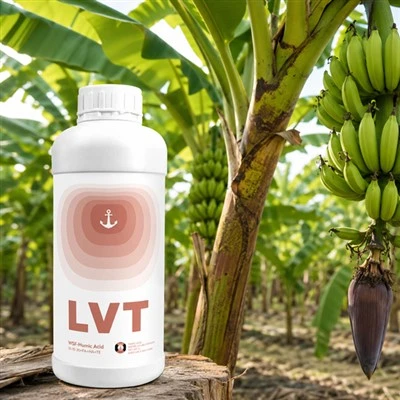
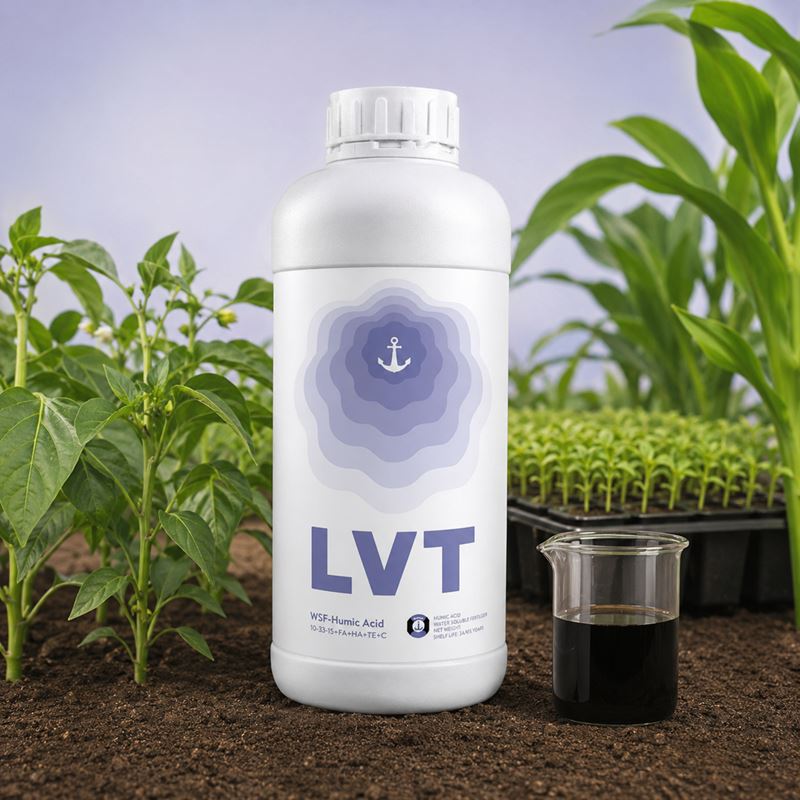
The product is a brown suspension with a density of 1.45 g/mL and a pH of 7.0 ± 0.5. It uses sugar alcohol chelation and is packed in a 1 L bottle. The confirmed route for this specification is whole-canopy foliar spraying at 500-800x dilution.
2. Ratio First: Why 10-33-15 Is a Selection Filter
The declared phosphorus pentoxide concentration is 3.3 times the nitrogen concentration and 2.2 times the potassium oxide concentration. That relationship is the first reason to choose, or reject, the product for a particular spray window.
A 16-16-16 grade distributes its three macronutrients evenly and is easier to position as a broad maintenance input. This 10-33-15 grade makes a different decision: it reduces the nitrogen share, raises phosphorus sharply, and keeps a moderate potassium contribution. The two products should not receive interchangeable descriptions simply because their organic supporting components look similar on a specification sheet.
This ratio can be considered when a foliar plan requires a phosphorus-weighted pass without removing nitrogen and potassium altogether. If the immediate objective is fruit filling or maturation, a potassium-led grade may fit better. If the crop only needs trace-element correction, a full NPK suspension may add nutrients that were not requested.
3. Technical Data & Specifications
| Item | Specification |
|---|---|
| Nitrogen (N) | ≥100 g/L |
| Phosphorus Pentoxide (P2O5) | ≥330 g/L |
| Potassium Oxide (K2O) | ≥150 g/L |
| Fulvic Acid (FA) | ≥25 g/L |
| Humic Acid (HA) | ≥30 g/L |
| Amino Acids (AA) | ≥40 g/L |
| Organic Matter (OM) | ≥140 g/L |
| Total Trace Elements (TE) | ≥4.5 g/L |
| Declared Carbon (C) | ≥80 g/L |
| Nutrient Direction | Phosphorus-led NPK |
| Chelation Technology | Sugar alcohol chelation |
| Physical Form | Suspension liquid |
| Appearance | Brown suspension |
| Density | 1.45 g/mL |
| pH | 7.0 ± 0.5 |
| Standard Package | 1 L bottle |
| Confirmed Application Method | Whole-canopy foliar spraying |
4. Organic Declarations That Travel With the NPK
The phosphorus-led ratio is carried in a suspension that also declares 140 g/L organic matter and 80 g/L carbon. These are broad analytical categories, not extra NPK values. They help describe the formulation but should remain separate from the guaranteed nitrogen, phosphorus pentoxide, and potassium oxide figures.
Humic acid is listed at 30 g/L, fulvic acid at 25 g/L, and amino acids at 40 g/L. Each declaration has its own meaning on the specification. Adding them to organic matter or carbon to advertise a larger combined total may double-count overlapping material, so the approved test basis should govern any aggregate claim.
Total trace elements are confirmed at 4.5 g/L. No individual element split has been supplied for this version. Iron, zinc, manganese, boron, copper, or molybdenum quantities should therefore not be invented for marketing copy or registration documents.
5. Four Program Junctions for a Phosphorus-Weighted Pass
After Stable Crop Establishment
The product may be considered once seedlings or transplants have resumed steady growth and the planned foliar program calls for a phosphorus-weighted input. It should not be promoted as a guaranteed rooting treatment, and stressed plants should recover normal water status before spraying.
Before a Reproductive-Stage Program
Vegetable, field-crop, vine, and orchard programs sometimes move from general nutrition toward flowering or reproductive management. This formula can occupy a defined transition pass where the nutrient plan supports its 10-33-15 direction. Crop stage alone is not enough; recent fertilizer inputs still matter.
Between Soil or Fertigation Events
Foliar use may supplement a broader feeding schedule when a separate canopy application is justified. The spray does not replace soil testing, substrate analysis, irrigation management, or the crop's root-zone nutrient supply.
Before Switching to a Potassium-Led Grade
Later fruit development often changes the desired ratio. Reassess the program rather than repeating 10-33-15 by habit. A future pass may require less phosphorus, more potassium, or no additional foliar NPK.
6. Build the Pass from Recent Inputs, Not Crop Names
A crop list cannot show what was applied last week. Before selecting this product, total the nitrogen, phosphorus, potassium, and trace elements already delivered through basal fertilizer, fertigation, other foliar feeds, and compound tank partners.
- For transplanted vegetables, the relevant question is whether plants are actively growing and ready for a phosphorus-led canopy treatment. In peppers, tomatoes, cucurbits, and eggplants, do not let the product name replace field observation or tissue data.
- For corn, beans, cotton, and other field crops, the economics of the pass depend on growth stage, equipment coverage, water volume, and the existing fertility plan. A stronger nutrient analysis does not compensate for poor deposition on the target leaves.
- For grapes, orchard crops, nursery stock, and protected cultivation, canopy density and variety sensitivity can change the usable concentration. Begin at the dilute end where the crop, water source, or spray combination is unfamiliar.
One practical screening question is enough to prevent many mismatches: does the field need this N:P2O5:K2O direction now? If the answer is unclear, obtain crop-specific guidance before adding another foliar input.
7. Application Directions
| Application Method | Dilution Ratio | Coverage Standard | Decision Point |
|---|---|---|---|
| Whole-canopy foliar spraying | 1:500-800 | Distribute fine droplets across accessible upper and lower leaf surfaces without heavy runoff | Choose the concentration from crop sensitivity, current growth, weather, water quality, and all other fertilizer inputs |
The recommendations above represent the most suitable application methods and rates for this product. If you plan to use a different fertilization method, please contact us for specific guidance.
8. Suspension Handling Is Part of the Rate
A measured dose is only representative when the suspension is uniform. Roll or shake the closed bottle thoroughly before opening. If the container has been standing, continue until material at the base has been fully redispersed.
Start tank preparation with clean water and operating agitation. Pre-dilute the measured product in a separate container, pour it slowly into the moving water, and then complete the final tank volume. Keep the mixture circulating during the application, including after field stops.
Use clean screens and nozzles suited to suspension fertilizers. Check them during long spray runs instead of waiting for uneven pressure or a changed spray pattern to reveal a blockage. Rinse the tank, filters, pump, lines, and nozzles after the work is complete.
For a new tank combination, use the intended water source to perform a jar test at the planned proportions. Do not proceed if the mixture develops hard sediment, flakes, gel, separation, unusual heat, or persistent excessive foam. A physically stable jar test still does not prove crop safety.
9. Procurement Questions for Neighboring NPK Grades
Similar bottles can conceal different agronomic jobs. A useful purchase review separates the grade into four questions: Which macronutrient leads? How much nitrogen accompanies it? Is the physical form a suspension? Which organic and trace-element declarations are actually guaranteed?
For this product, the answers are phosphorus, 100 g/L nitrogen, a brown suspension, and a defined FA-HA-AA-OM-TE-C matrix. That profile distinguishes it from a balanced 16-16-16 grade and from a potassium-led grade intended for a later program stage.
10. FAQ
1. Is 10-33-15 a Balanced NPK Grade?
No. Phosphorus pentoxide is declared at 330 g/L, compared with 100 g/L nitrogen and 150 g/L potassium oxide. The formula is phosphorus-led.
2. Does 10-33-15 Mean 10%, 33%, and 15% by Weight?
Not automatically. The confirmed guarantees are stated in grams per liter. Any percentage-by-weight declaration requires the applicable analytical basis and calculation.
3. Can This Product Be Marketed as a Rooting Fertilizer?
The confirmed instruction for this specification is whole-canopy foliar spraying. Do not promise rooting results without product-specific trial evidence and an approved claim for the destination market.
4. When Is 10-33-15 a Better Fit Than 16-16-16?
It may be the more logical choice when the program requires a phosphorus-weighted foliar pass and does not need the higher nitrogen contribution of the balanced grade. Field conditions and prior inputs should confirm the choice.
5. Why Must the Bottle Be Shaken?
The product is a brown suspension, not a clear solution. Redispersing it before measurement helps ensure that the sampled dose represents the complete formulation.
6. Can It Be Tank-Mixed with Calcium Fertilizer or Pesticides?
Concentrated phosphate and calcium products require particular caution because precipitation may occur. Dilute products separately, conduct a jar test with the actual water, follow approved labels, and complete a small crop-safety test before using an unfamiliar mixture.
Contact WEIFANG LVWEITE BIO-TECH CO., LTD. for:
- Product samples
- Technical data and COA
- MSDS
- OEM packaging
- Private-label production
- Export quotations
- Registration support
Hot Tags: phosphorus-led npk 10-33-15 humic acid fertilizer | lvt, China phosphorus-led npk 10-33-15 humic acid fertilizer | lvt manufacturers, suppliers, factory