

Products Description
1. Introduction
Some foliar programmes require a targeted trace-element input without adding another full NPK fertilizer. In that situation, the practical question is not simply how many elements appear on the label, but whether the declared profile matches the crop, timing and other nutrients already being applied.
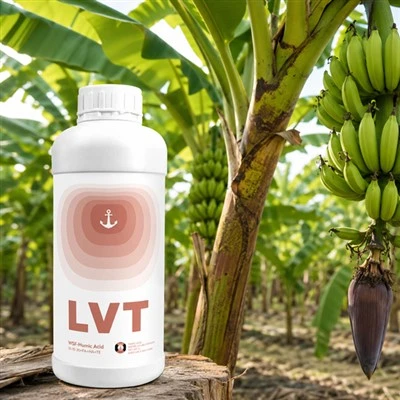
LVT Amino Acid Chelated Multi-Micronutrient Liquid Fertilizer is led by 135 g/L amino acids and 16 g/L boron. Zinc and iron are each supplied at 3 g/L, with additional magnesium, copper, manganese and molybdenum at individually declared concentrations. Amino acid chelation is the confirmed complexing method.
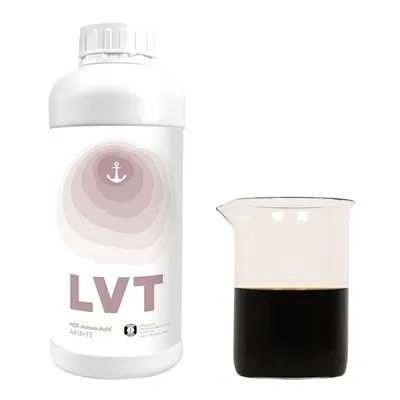
The product is a clear liquid with a density of 1.11 g/mL and a pH of 7.5 ± 0.5. It is packed in a 1 L bottle and intended for whole-canopy foliar spraying at a dilution of 500–800 times. It should be positioned as a planned multi-micronutrient supplement rather than a general-purpose fertilizer or a guaranteed treatment for stress symptoms.
2. What This Formula Covers-and What It Does Not
The mineral profile covers seven declared nutrients: boron, zinc, iron, magnesium, copper, manganese and molybdenum. Their concentrations are not equal, and the product should not be described as a balanced trace-element mixture. Boron at 16 g/L is the leading mineral nutrient, while zinc and iron form a second tier at 3 g/L each.
Magnesium, copper, manganese and molybdenum are present at lower levels. These values matter when comparing the product with a single-element corrective fertilizer or with a broader formulation that declares a different micronutrient set.
The current specification does not declare nitrogen, phosphorus, potassium, calcium, cobalt or organic matter. Those nutrients should not be added to the product description on the basis of an older page, product family or packaging shorthand. Likewise, the phrase "complete trace element" would be too broad: the page should name the nutrients that are actually guaranteed.
This narrower definition helps buyers choose the product for its real composition. It also prevents overlapping applications when separate boron, zinc, iron or copper products already appear in the seasonal program.
3. Technical Data & Specifications
| Item | Specification |
|---|---|
| Amino Acids (AA) | ≥135 g/L |
| Boron (B) | ≥16 g/L |
| Zinc (Zn) | ≥3 g/L |
| Iron (Fe) | ≥3 g/L |
| Magnesium (Mg) | ≥0.2 g/L |
| Copper (Cu) | ≥0.4 g/L |
| Manganese (Mn) | ≥0.5 g/L |
| Molybdenum (Mo) | ≥0.0005 g/L |
| Chelation Technology | Amino acid chelation |
| Formulation | Concentrated clear liquid |
| Appearance | Clear liquid |
| Density | 1.11 g/mL |
| pH | 7.5 ± 0.5 |
| Standard Package | 1 L bottle |
| Confirmed Application Method | Whole-canopy foliar spraying |
| Recommended Dilution | 1:500–800 |
4. Amino Acid Chelation as the Formulation Principle
Amino acids are the largest declared component of the formula at 135 g/L. They also define the product's chelation approach, distinguishing it from an inorganic salt blend or a sugar-alcohol-chelated fertilizer.
In commercial use, chelation describes how mineral ions are held within the liquid formulation. It does not by itself prove a fixed absorption percentage, a specific movement rate inside the plant or equal performance under every water-quality condition. Claims of that kind require product-specific trial data.
The clear-liquid form supports straightforward measuring and dilution. It should still be mixed into water in the correct order, because clarity in the bottle does not guarantee compatibility with every pesticide, fertilizer or adjuvant.
The concentrate's pH of 7.5 ± 0.5 is a product specification, not the final pH of a spray tank. Water alkalinity, tank volume and other inputs can change the finished mixture. Compatibility decisions should therefore use the actual water source intended for application.
5. Selecting the Right Application Window
This product is most useful when several of its declared nutrients are relevant at the same time. It is a poor substitute for diagnosis when only one nutrient is required at a precisely controlled rate.
Active canopy development
During new leaf and shoot growth, growers may use a multi-micronutrient foliar pass to complement the root-zone programme. Existing iron, manganese, zinc and magnesium inputs should be checked before scheduling an additional application.
Transition toward flowering
Boron and zinc often receive attention as crops approach reproductive development. Because boron is the leading mineral component of this formula, crop tolerance and the total seasonal boron input deserve particular review.
Early reproductive growth
The product may be considered after fruit set or during early reproductive development where leaf analysis, crop history or local technical guidance supports a combined nutrient application. It should not be promoted as a guaranteed way to increase fruit set, prevent flower loss or correct every visible disorder.
Between specialised products
The formula can also serve as a bridge between stage-specific fertilizers when a grower wants an amino-acid-led micronutrient spray without an additional declared NPK contribution. Application should follow crop development rather than a fixed calendar.
6. Crop Selection by Spray Objective
For fruiting vegetables such as pepper, tomato, cucumber, eggplant, melon and watermelon, the product may be considered during active canopy growth or around the transition into reproductive development. Dense greenhouse crops require careful nozzle direction so that the spray reaches more than the outer leaf layer.
In grapes, citrus, apples, pears and other commercial fruit crops, decisions should be coordinated with the orchard's existing boron, zinc, iron and copper programme. Avoid assuming that every crop or cultivar requires the same number of passes.
Tea, leafy vegetables and nursery crops may use the formulation where a combined foliar micronutrient input is justified. Since the harvested surface may be the leaf itself, follow local residue, spray-interval and market requirements for every material in the tank.
Rice, maize, beans and other field crops can be evaluated according to crop stage, tissue analysis and local agronomic practice. On large areas, conduct a small strip trial before extending the spray to the full block.
Suitable crop groups may include:
- Fruiting vegetables and greenhouse crops
- Grapes, citrus and established orchards
- Tea and other managed perennial crops
- Leafy vegetables and commercial nurseries
- Rice, maize, beans and selected field crops
- Flowers and ornamental plants with confirmed crop tolerance
Crop inclusion is not a diagnosis. Soil or substrate conditions, water quality, variety, weather and the complete fertilizer programme remain part of the application decision.

7. Application Directions
| Application Method | Recommended Dilution | Spray Target | Timing and Notes |
|---|---|---|---|
| Whole-canopy foliar spraying | 1:500–800 | Apply a fine, even spray across leaves and actively growing canopy surfaces without excessive runoff | Spray during the cooler part of the day. Select concentration according to crop sensitivity, growth stage, water quality and other nutrient inputs. |
The recommendations above represent the most suitable application methods and rates for this product. If you plan to use a different fertilization method, please contact us for specific guidance.
Dilution Reference
| Final Water Volume | Product at 500× | Product at 800× |
|---|---|---|
| 15 L | 30 mL | 18.75 mL |
| 20 L | 40 mL | 25 mL |
| 100 L | 200 mL | 125 mL |
| 500 L | 1.00 L | 625 mL |
| 1,000 L | 2.00 L | 1.25 L |
Do not pour the concentrate directly onto foliage, fruit, stems, roots or dry growing media. The confirmed direction for this specification covers foliar spraying only; fertigation and root drenching require separate product-specific guidance.
8. Choosing Between 500× and 800×
Use 1:800 for the first application on a new crop, sensitive variety or unfamiliar tank combination. Treat a small, representative area and observe the crop before spraying the full field or greenhouse.
The 1:500 dilution contains 60% more product per unit of water than a 1:800 mixture. It should therefore be selected deliberately rather than used as the automatic starting point. Crop tolerance, canopy age, temperature, humidity, water quality and overlapping micronutrient inputs all influence that decision.
Coverage should be improved through nozzle selection, pressure, walking speed and spray direction-not by increasing concentration simply because the canopy is dense. Aim for fine, even wetting without large droplets, pooling or heavy runoff.
Avoid application in intense sunlight, high temperature, strong wind or immediately before rainfall. Do not spray severely wilted, waterlogged or otherwise damaged crops. Use the prepared solution during the same working period and rinse the spray equipment with clean water afterward.
Request a Crop-Specific Dilution Review
9. Mixing, Handling and Buyer Verification
Before preparing an unfamiliar tank mix, conduct a jar test with the actual spray water and the intended proportions. Add products one at a time in the same sequence planned for the tank. Do not use the combination if it produces persistent cloudiness, particles, sediment, separation, gel, excessive foam or unusual heat.
Never combine undiluted fertilizer concentrates directly. Strongly alkaline materials and concentrated mineral products require additional caution, but a physically stable jar test does not establish crop safety. When pesticides, oils, plant-growth regulators or adjuvants are involved, follow the most restrictive approved label and complete a small-area crop test.
For quotations, labels and registration work, buyers should verify the following version-specific points:
- The formula declares AA, B, Zn, Fe, Mg, Cu, Mn and Mo.
- Cobalt is not part of the current guaranteed analysis.
- Magnesium is ≥0.2 g/L, copper is ≥0.4 g/L and manganese is ≥0.5 g/L.
- Molybdenum is ≥0.0005 g/L.
- Density is 1.11 g/mL and pH is 7.5 ± 0.5.
- The physical form is a clear liquid; no unconfirmed colour should be added to the specification.
- The confirmed use is whole-canopy foliar spraying at 500–800×.
- The standard presentation is a 1 L bottle.
Store the closed bottle in a cool, dry and ventilated location, protected from direct sunlight, freezing and prolonged heat. Keep it away from children, food, animal feed and incompatible materials. Final label language, packaging and use directions must follow the requirements of the destination market.
10. FAQ
1. Is this a complete trace-element fertilizer?
It should be described by its declared composition rather than as universally complete. The current specification lists boron, zinc, iron, magnesium, copper, manganese and molybdenum. It does not declare every mineral nutrient.
2. Does the current formula contain cobalt?
No cobalt value is included in the confirmed specification. Cobalt should therefore not appear in the guaranteed-analysis table, composition graphic or revised product description.
3. Does the amino acid content make the product suitable for certified organic farming?
Not automatically. Amino acid content and placement within an organic-fertilizer product category do not establish certification. Eligibility depends on the ingredients, manufacturing process and applicable destination-market rules.
4. Can the product be used through fertigation or root drenching?
Whole-canopy foliar spraying at 500–800× is the only application method confirmed for this page. Contact LVT for separate crop-specific guidance before using another delivery method.
5. Which dilution should be used for an initial trial?
Begin at 1:800 and spray a small representative area. Review physical compatibility and crop response before treating the complete area or moving toward 1:500.
6. Do the values in g/L equal percentage by weight?
No direct conversion should be assumed. Grams per litre express mass per unit volume, while percentage by weight uses a different basis. Publish a weight-percentage value only when it is supported by the approved specification and relevant calculation.
Contact WEIFANG LVWEITE BIO-TECH CO., LTD. for:
- Product samples
- Technical data and COA
- MSDS
- OEM packaging
- Private-label production
- Export quotations
- Registration support
Hot Tags: amino acid chelated micronutrient fertilizer | lvt, China amino acid chelated micronutrient fertilizer | lvt manufacturers, suppliers, factory