High Potassium Humic Acid Fertilizer for Banana Fruit Filling
Introduction
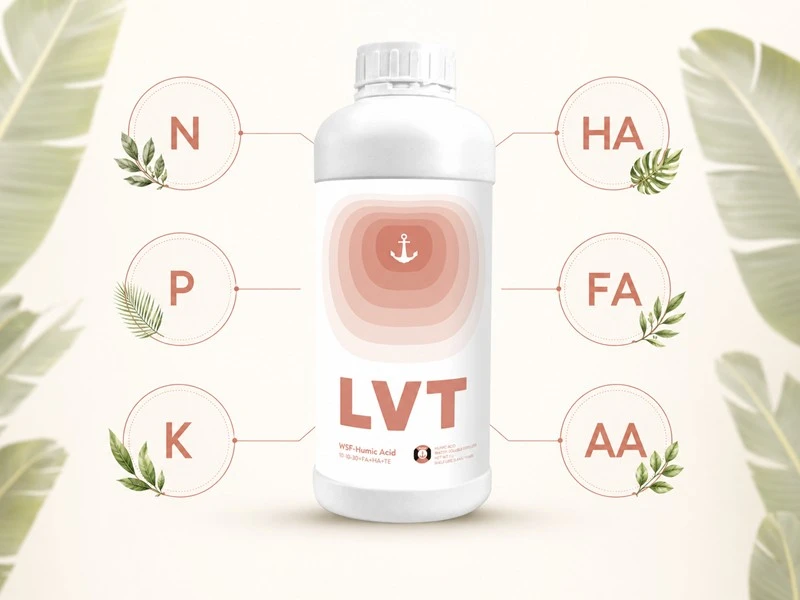
Our High Potassium Humic Acid Fertilizer for Banana Fruit Filling is a concentrated NPK suspension developed for the reproductive and fruit-filling stages of banana production. The formulation supplies 300 g/L potassium oxide together with nitrogen, phosphorus, humic acid, fulvic acid, amino acids, organic matter and trace elements. It is designed to complement a complete banana fertilization programme from bunch emergence through finger filling.
Potassium is involved in plant water regulation, enzyme activity and the transport of carbohydrates from photosynthetically active leaves to developing organs. Maintaining an adequate potassium supply during bunch development can support normal fruit filling, bunch uniformity and final quality.
The product is suitable for commercial banana plantations, plantain production and other tropical fruit crops after adjustment to local soil, climate and nutrient-management conditions.
Technical Data & Specifications
| Parameter | Guaranteed content |
|---|---|
| Total Nitrogen (N) | ≥100 g/L |
| Phosphorus Pentoxide (P₂O₅) | ≥100 g/L |
| Potassium Oxide (K₂O) | ≥300 g/L |
| Humic Acid (HA) | ≥30 g/L |
| Fulvic Acid (FA) | ≥25 g/L |
| Amino Acids (AA) | ≥40 g/L |
| Organic Matter (OM) | ≥200 g/L |
| Trace Elements (TE) | ≥4.5 g/L |
| Physical form | Concentrated nutrient suspension |
| pH value | 6.0 ± 0.5 |
| Density | Approximately 1.53 g/mL |
Why Banana Crops Need Potassium?
Banana plants remove substantial quantities of nutrients from the field when fruit bunches are harvested. Potassium and magnesium deficiencies can become important limitations where removed nutrients are not adequately replenished.
Potassium demand is especially important during reproductive development because it participates in:
- Plant water balance and stomatal regulation
- Enzyme activation
- Photosynthesis and carbohydrate metabolism
- Transport of assimilates to developing fruit
- Normal bunch and finger development
- Maintenance of productive leaf activity
- General tolerance to environmental stress
Possible indicators of inadequate potassium nutrition may include:
- Marginal yellowing or scorching of older leaves
- Premature decline of functional leaves
- Slow or incomplete finger filling
- Reduced bunch uniformity
- Lower fruit weight
- Weak plant performance under high crop load
These symptoms are not unique to potassium deficiency. Root damage, water stress, salinity, disease, magnesium deficiency and other nutrient imbalances can cause similar effects. It is very important to analysis the soil and leaf whenever possible.
Key Nutritional Benefits
1. High-Potassium Nutrition for Fruit Filling
The formulation provides 300 g/L K₂O and is intended for use after the crop shifts from primarily vegetative growth to bunch and fruit development.
Adequate potassium nutrition during this period can support:
- Normal banana finger expansion
- More uniform bunch development
- Carbohydrate transport within the plant
- Increase fruit quality potential
- Better nutrient support under high bunch load
Remarks: Final results depend on cultivar, climate, leaf area, water supply, soil fertility, disease pressure and the overall fertilizer programme.
2. Balanced NPK Support
Although potassium is the dominant macronutrient, this formula also provides 100 g/L nitrogen and 100 g/L P₂O₅.
This combination supplies supplementary macronutrients during fruit development without positioning the product as a potassium-only fertilizer. The total nitrogen supplied from all fertilizer sources should still be controlled according to crop stage and leaf-analysis results.
3. Humic and Fulvic Acid Matrix
The product contains both humic acid and fulvic acid as part of its organic nutrient matrix.
When used through the root zone, these components can complement soil and nutrient-management programmes, particularly where growers are seeking to combine mineral nutrition with organic matter inputs.
They should not be presented as a replacement for:
- Proper irrigation
- Adequate soil organic matter
- Root-zone aeration
- Balanced mineral nutrition
- Soil and leaf testing
4. Amino Acids and Organic Matter
The formulation provides 40 g/L amino acids and 200 g/L organic matter.
These can make the product suitable for integrated crop-nutrition programmes in intensive banana cultivation, especially during periods of high reproductive demand or moderate environmental stress.
5. Trace Element Supplementation
The product includes a trace-element mixture of at least 4.5 g/L. It can provide supplementary micronutrient nutrition, although the individual trace elements and their chemical forms should be stated on the final technical data sheet before publication.
Recommended Crops
- Cavendish banana
- Dessert banana
- Plantain
- Commercial banana plantations
- Pineapple
- Mango
- Papaya
- Citrus
- Other tropical fruit crops
For crops other than banana, application timing and rates should be adjusted after local agronomic evaluation.
Application Recommendations
| Application method | Suggested dilution | Suggested interval | Recommended use |
|---|---|---|---|
| Fertigation | 1:800–1,000 | Every 10–15 days | Main root-zone application during bunch development |
| Root drenching | 1:600–800 | Every 10–15 days | Application around the active root zone |
| Foliar spraying | 1:1,000–1,500 | Every 7–10 days | Supplementary foliar nutrition |
Remarks:
Application rates should be adjusted according to:
- Banana variety
- Plant density
- Bunch load
- Growth stage
- Soil type
- Existing potassium level
- Leaf-analysis results
- Water quality
- Rainfall and irrigation
- Local fertilizer recommendations
- Other potassium sources in the programme
Practical Banana Nutrition Recommendations
For better results, use this product as part of a complete banana-management programme:
- Base the main fertilizer programme on soil and leaf analysis.
- Maintain regular irrigation during bunch and finger development.
- Avoid severe drying followed by sudden heavy irrigation.
- Protect the active root zone from waterlogging and physical damage.
- Maintain sufficient functional leaves to support fruit filling.
- Monitor magnesium and calcium when applying high potassium rates.
- Avoid excessive nitrogen close to harvest.
- Split potassium applications where leaching risk is high.
- Adjust applications after heavy rainfall.
- Consider potassium supplied by soil, compost and other fertilizers.
Tank-Mix Compatibility
Because this formulation contains concentrated NPK nutrients and is supplied as a suspension:
- Shake or agitate thoroughly before use.
- Maintain agitation while preparing the spray or fertigation solution.
- Do not mix in a concentrated stock tank with calcium fertilizers.
- Avoid mixing directly with strongly acidic or alkaline products.
- Check compatibility before combining with pesticides or micronutrient concentrates.
- Conduct a small jar test before preparing a large tank.
- Use suitable filtration in drip-irrigation systems.
- Flush the irrigation system after application.
- Apply incompatible products separately.
The presence of phosphorus makes separation from concentrated calcium stock solutions particularly important.
Foliar Application Precautions
When using the product as a foliar spray:
- Spray during the cooler part of the day.
- Avoid application under strong sunlight or high temperatures.
- Do not spray severely drought-stressed plants.
- Test the solution on a small area before full-field use.
- Use clean water of suitable pH and salinity.
- Ensure even coverage without excessive runoff.
- Follow local pesticide tank-mixing restrictions.
Packaging and OEM Service
Standard packaging options:
500 mL, 1 L, 20 L, 200 L
Customized packaging is available upon request, including:
- Private-label production
- Customized label design
- Different bottle and drum sizes
- Customer-specific nutrient specifications
- Multilingual labels
- Export cartons and palletized packaging
- COA and MSDS documentation
- Sample supply for evaluation
Final packaging and label information can be adjusted according to the registration requirements of the importing country.
FAQ
1. When should this fertilizer be used on bananas?
It is primarily designed for the period from bunch emergence through finger filling. The exact starting time and application frequency should be adjusted according to cultivar, leaf analysis, soil fertility and the existing fertilizer program.
2. Is this a potassium-only fertilizer?
No. It is an NPK suspension containing 100 g/L nitrogen, 100 g/L P₂O₅ and 300 g/L K₂O. It also contains humic acid, fulvic acid, amino acids, organic matter and trace elements.
3. Can this fertilizer guarantee larger banana bunches?
No fertilizer can guarantee bunch size by itself. Bunch development also depends on variety, plant health, functional leaf area, irrigation, temperature, disease management and overall nutrition.
The product provides high-potassium nutritional support during fruit filling.
4. Can it increase banana sweetness?
Adequate potassium participates in carbohydrate metabolism and transport, but the final fruit composition also depends on cultivar, maturity, climate and post-harvest ripening.
5. Can it be used on pineapples?
Yes, the formulation may be used in pineapple fruit-development programs after local evaluation. Rates and application stages should be adjusted for pineapple rather than copied directly from banana recommendations.
6. Can it be applied through drip irrigation?
Yes. It is one of the recommended application methods. Because the product is a concentrated suspension, it should be thoroughly diluted, filtered where necessary and kept agitated during preparation.
7. Can it be mixed with calcium fertilizer?
Do not combine it with concentrated calcium fertilizer in the same stock tank because the phosphorus component may form insoluble calcium compounds. Use separate A/B tanks or apply at different times.
8. Will high potassium cause magnesium deficiency?
High potassium levels can compete with magnesium and calcium uptake under some conditions. Monitor soil and leaf nutrient status and adjust magnesium or calcium separately where required.
Contact WEIFANG LVWEITE BIO-TECH CO., LTD. for:
- Product samples
- Technical data
- COA and MSDS
- OEM packaging
- Private-label production
- Export quotation
- Registration document support
Hot Tags: high potassium humic acid fertilizer for banana fruit filling, China high potassium humic acid fertilizer for banana fruit filling manufacturers, suppliers, factory