

Potassium-Led NPK 10-10-30 Humic Acid Suspension Fertilizer
1. Introduction
As a crop moves beyond fruit set, the fertilizer question changes. The objective is no longer simply to maintain leaf production or supply a general mix of nutrients. Growers begin weighing crop load, the speed of fruit development, canopy condition, expected harvest timing, and the nutrients already available through the root zone.
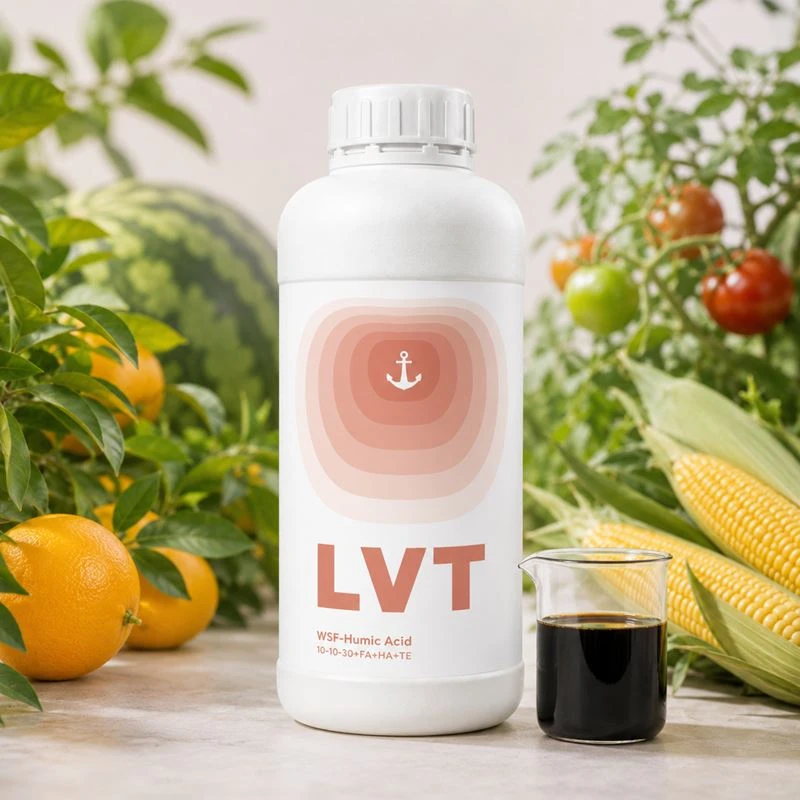
LVT NPK 10-10-30 Humic Acid Fertilizer is built around that later-stage calculation. Nitrogen and phosphorus pentoxide are each declared at 100 g/L, while potassium oxide reaches 300 g/L. The resulting 1:1:3 relationship gives potassium the lead without turning the product into a nitrogen-free or phosphorus-free input.
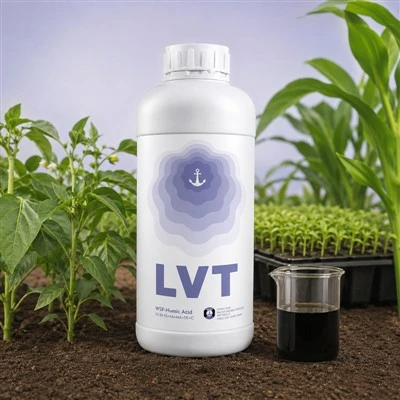
The concentrate is a brown suspension. It has a density of 1.53 g/mL, a pH of 6.0 ± 0.5, and a standard package size of 1 L. Sugar alcohol chelation is the stated formulation technology. Whole-canopy foliar spraying at 500-800x is the confirmed application route.
2. The 1:1:3 Ratio Sets the Boundary
Calling a product high potassium is useful only when the other two NPK figures are read at the same time. Here, potassium oxide is three times either nitrogen or phosphorus pentoxide. The ratio points toward crop periods where potassium deserves more weight, but some nitrogen and phosphorus are still acceptable within the complete program.
That boundary separates this grade from the two neighboring humic NPK products. A 16-16-16 formula spreads its macronutrients evenly. A 10-33-15 formula is led by phosphorus. The present 10-10-30 grade shifts the emphasis toward potassium and should be selected for a different field objective.
It is not automatically the right product for every fruiting crop. A block with excessive vegetative growth may not need another 100 g/L nitrogen input. A field already receiving a strong potassium program may gain little from another overlapping pass. The ratio is a selection tool, not a universal recommendation.
3. Technical Data & Specifications
| Item | Specification |
|---|---|
| Nitrogen (N) | ≥100 g/L |
| Phosphorus Pentoxide (P2O5) | ≥100 g/L |
| Potassium Oxide (K2O) | ≥300 g/L |
| Fulvic Acid (FA) | ≥25 g/L |
| Humic Acid (HA) | ≥30 g/L |
| Amino Acids (AA) | ≥40 g/L |
| Organic Matter (OM) | ≥150 g/L |
| Total Trace Elements (TE) | ≥4.5 g/L |
| Macronutrient Relationship | 100-100-300 g/L |
| Chelation Technology | Sugar alcohol chelation |
| Physical Form | Suspension liquid |
| Appearance | Brown suspension |
| Density | 1.53 g/mL |
| pH | 6.0 ± 0.5 |
| Standard Package | 1 L bottle |
| Confirmed Application Method | Whole-canopy foliar spraying |
4. What a 100 L Spray Tank Actually Carries
Dilution ratios can feel abstract. Looking at the declared nutrient load in a standard 100 L spray volume gives the applicator a more practical way to compare the 500x and 800x ends of the range.
| Declared Component | At 500x, Using 200 mL Product | At 800x, Using 125 mL Product |
|---|---|---|
| Nitrogen (N) | 20 g | 12.5 g |
| Phosphorus Pentoxide (P2O5) | 20 g | 12.5 g |
| Potassium Oxide (K2O) | 60 g | 37.5 g |
| Fulvic Acid (FA) | 5 g | 3.125 g |
| Humic Acid (HA) | 6 g | 3.75 g |
| Amino Acids (AA) | 8 g | 5 g |
| Organic Matter (OM) | 30 g | 18.75 g |
| Total Trace Elements (TE) | 0.9 g | 0.5625 g |
These figures describe the calculated quantity added to 100 L of final spray water, not the amount absorbed by the crop. Actual deposition varies with equipment, canopy architecture, weather, travel speed, nozzle selection, and runoff.
The organic declarations should also remain separate. Humic acid, fulvic acid, amino acids, and organic matter are not four amounts that should automatically be added together as one larger marketing total.
5. Work Backward from the Planned Harvest
Once Fruit Set Is Secure
The first useful window comes after the crop has established a viable fruit load and the manager has decided to maintain it. Applying a potassium-led formula before that point simply because the crop is flowering can be premature.
During Active Fruit Expansion
Watermelon, melon, tomato, pepper, cucumber, citrus, grapes, and other fruiting crops may enter a period of rapid dry-matter accumulation. A 10-10-30 foliar pass can be reviewed here when the existing program supports its nutrient ratio.
As Maturity Approaches
Late applications should be deliberate. Crop water demand, harvest interval, canopy condition, remaining nitrogen requirement, and every root-zone potassium source should be checked before repeating the treatment.
At the End of the Cycle
Stop treating the fertilizer schedule as automatic. Once harvest is under way, field records should determine whether another pass has a clear purpose for later picks or whether the program should end.
6. Crop Load Matters More Than a Long Crop List
Indeterminate Fruiting Vegetables
Tomato, pepper, eggplant, cucumber, and protected-crop systems can carry flowers, small fruit, and harvestable fruit at the same time. The decision should account for that mixed canopy rather than treating the entire block as a single growth stage.
Melons and Other Concentrated Harvest Crops
Watermelon and melon often have a more defined fruit-filling window. Check vine condition, retained fruit number, irrigation uniformity, and the base fertilizer program before adding a foliar potassium input.
Orchards and Vines
Citrus, apple, pear, peach, and grape programs may use several separate nutrition passes between fruit set and harvest. Canopy access, crop load, leaf condition, and the current root-zone supply determine whether 10-10-30 fits one of those passes.
Seed, Grain, and Storage-Organ Crops
Beans, corn, potato, and selected field crops may also reach stages where potassium receives greater attention. Use should follow a diagnosed program need and an economically realistic application window, not a fruit-crop label transferred without review.

7. Application Directions
| Application Method | Dilution Ratio | Spray Target | Operating Notes |
|---|---|---|---|
| Whole-canopy foliar spraying | 1:500-800 | Apply fine droplets to accessible upper and lower leaf surfaces without heavy runoff | Spray during the cooler part of the day. Choose the final dilution from crop sensitivity, crop load, canopy density, water quality, and existing fertilizer inputs. |
The recommendations above represent the most suitable application methods and rates for this product. If you plan to use a different fertilization method, please contact us for specific guidance.
Dilution Reference
| Final Water Volume | Product at 500x | Product at 800x |
|---|---|---|
| 15 L | 30 mL | 18.75 mL |
| 20 L | 40 mL | 25 mL |
| 100 L | 200 mL | 125 mL |
| 500 L | 1.00 L | 625 mL |
| 1,000 L | 2.00 L | 1.25 L |
Start at 1:800 when the crop, variety, water source, or tank combination has not previously been tested. Treat a small area and inspect the crop before moving toward 1:500.
Request a Fruit-Filling Spray Review
8. A Brown Suspension Needs a Working Routine
The concentrate is not a clear liquid. Finely dispersed material can settle while the bottle is stored, so rolling or shaking the closed container is part of accurate measuring. Continue until the contents appear uniform.
Begin with clean water and working tank agitation. Pre-dilute the measured fertilizer in a separate container, add it slowly to the circulating water, and then complete the final volume. Keep the mixture moving throughout the spray operation, including after stops between orchard rows or field sections.
Before an unfamiliar tank mix, test the intended water and proportions in a small jar. Watch the mixture over time. Hard sediment, flakes, gel, separation, unusual heat, or persistent foam are reasons not to prepare the full tank.
Phosphate-containing fertilizers require particular care around concentrated calcium products. Pesticides, oils, alkaline materials, and other foliar nutrients may also change physical stability or crop safety. Follow the most restrictive approved label and conduct a small-area crop test.
9. Let the Harvest Record Decide the Next Pass
The value of a late-season foliar application cannot be judged from leaf color alone. Mark representative plants or rows before spraying and record the crop stage, fruit load, irrigation status, recent fertilizer inputs, weather, and planned harvest date.
At harvest, use measurements that match the crop and market. These may include size distribution, packout, rejected fruit, dry matter, soluble solids, firmness, or the number of marketable picks. Do not select a metric after the result is known, and do not treat normal variation as proof of fertilizer performance.
Store the 1 L bottle upright and tightly closed in a cool, dry, ventilated location. Protect it from freezing, prolonged heat, and direct sunlight. Keep it separated from food and feed, and redisperse the suspension before every measurement.
10. FAQ
1. How Does 10-10-30 Differ from 10-33-15?
The two grades reverse the main nutrient emphasis. The 10-10-30 formula is led by potassium oxide at 300 g/L, while 10-33-15 is led by phosphorus pentoxide at 330 g/L. They belong in different nutrition windows.
2. Does the Product Name Represent Percentage by Weight?
Not automatically. The confirmed analysis is expressed in grams per liter: N ≥100 g/L, P2O5 ≥100 g/L, and K2O ≥300 g/L.
3. Can It Be Applied from Flowering Through Harvest?
Do not use one fixed schedule for every crop. The formula is more naturally positioned after fruit set, but timing should still follow crop load, maturity, previous fertilizer use, and local guidance.
4. Does It Guarantee Larger or Sweeter Fruit?
No. Potassium nutrition is one part of crop management. Variety, irrigation, temperature, light, crop load, root health, and harvest timing also influence fruit size and quality.
5. Why Is Continuous Agitation Recommended?
The product is a suspension. Agitation helps keep dispersed material uniform from tank preparation through the end of the spray run.
6. Can It Be Mixed with Calcium Fertilizer or Pesticides?
Compatibility depends on concentration, formulation, water quality, and mixing order. Dilute materials separately, complete a jar test, follow approved labels, and test a small crop area before using a new combination.
Contact WEIFANG LVWEITE BIO-TECH CO., LTD. for:
- Product samples
- Technical data and COA
- MSDS
- OEM packaging
- Private-label production
- Export quotations
- Registration support
Hot Tags: potassium-led npk 10-10-30 humic acid fertilizer | lvt, China potassium-led npk 10-10-30 humic acid fertilizer | lvt manufacturers, suppliers, factory