

Growth Control Amino Acid Foliar Fertilizer
1. Introduction
Vigor control begins with an observation, not a bottle. Long internodes, rapidly closing rows and repeated side-shoot removal may indicate that vegetative growth is moving faster than the production plan requires. The same appearance can also result from low light, excess nitrogen, warm conditions or irrigation practices, so the cause should be reviewed before a corrective spray is selected.
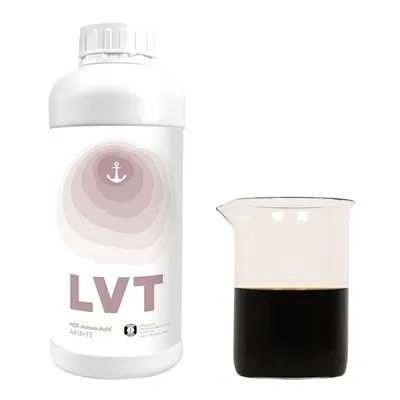
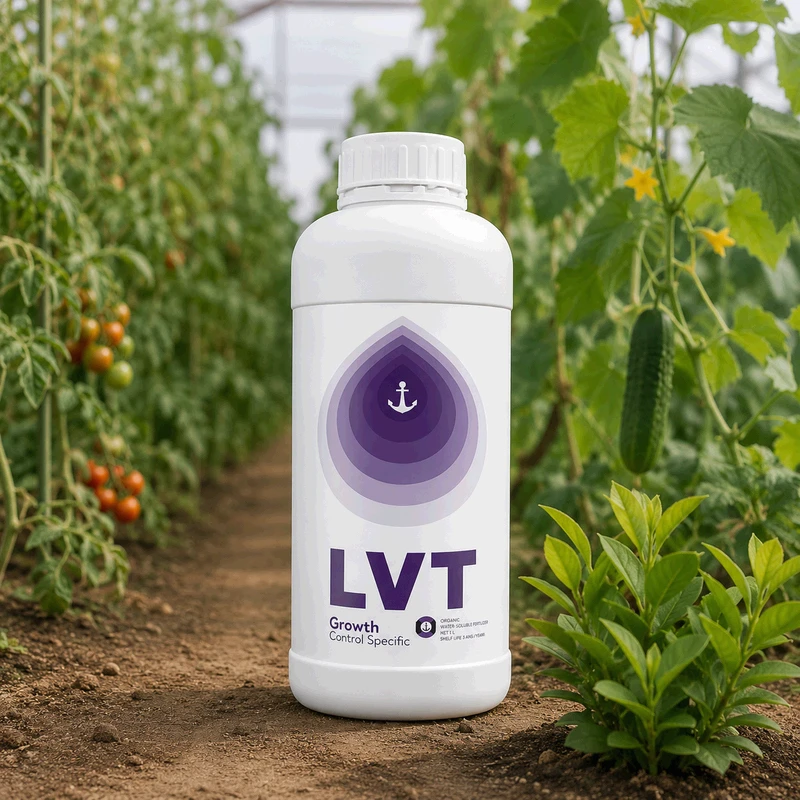
LVT Growth Control Amino Acid Foliar Fertilizer is a dark brown clear liquid developed for nutrition-based canopy management. It combines 250 g/L organic matter, 164 g/L polyhydric alcohols, 107 g/L amino acids and 20 g/L polypeptides with NPK and a seven-element mineral package.
The product is applied to both upper and lower leaf surfaces at 300-500x dilution. Its role is to support a more controlled growth program where excessive vigor has been identified. It should be used together with irrigation, nitrogen, pruning, training and crop-load decisions.
2. Separate Excessive Vigor From Healthy Growth
A fast-growing crop is not automatically overgrown. Intervention becomes more relevant when canopy development starts interfering with light distribution, air movement, labor access or reproductive management.
Before selecting the spray rate, check for a combination of field observations:
- Internodes are extending beyond the target for the crop and production system.
- New side shoots return rapidly after routine pruning or training.
- Adjacent plants or rows are closing earlier than planned.
- Dense foliage is reducing access for inspection, harvesting or spray coverage.
- Recent nitrogen or irrigation inputs may be supporting more shoot growth than required.
- Flowering, fruit set or crop-load development is not keeping pace with canopy expansion.
One observation alone is not a diagnosis. If the crop is pale, wilted, waterlogged, heat stressed or affected by disease, stabilize those conditions before considering a vigor-control treatment.
3. Technical Data & Specifications
| Item | Specification |
|---|---|
| Nitrogen (N) | ≥46 g/L |
| Phosphorus Pentoxide (P2O5) | ≥52 g/L |
| Potassium Oxide (K2O) | ≥128 g/L |
| Amino Acids (AA) | ≥107 g/L |
| Organic Matter (OM) | ≥250 g/L |
| Polyhydric Alcohols (PA) | ≥164 g/L |
| Polypeptides (PP) | ≥20 g/L |
| Boron (B) | ≥9.35 g/L |
| Iron (Fe) | ≥4.55 g/L |
| Zinc (Zn) | ≥4.35 g/L |
| Manganese (Mn) | ≥1.25 g/L |
| Copper (Cu) | ≥1.01 g/L |
| Calcium (Ca) | ≥0.95 g/L |
| Magnesium (Mg) | ≥0.55 g/L |
| Chelation Technology | Sugar alcohol chelation |
| Formulation | Clear liquid concentrate |
| Appearance | Dark brown clear liquid |
| Density | 1.39 g/mL |
| pH | 7.5 ± 0.5 |
| Standard Package | 1 L bottle |
| Confirmed Application Method | Two-sided foliar spraying |

4. Read the Formula by Weight, Not by Marketing Category
The largest declared fraction is organic matter
Organic matter is listed at 250 g/L. Polyhydric alcohols follow at 164 g/L, with amino acids at 107 g/L and polypeptides at 20 g/L. These four values form the organic and complexing side of the formula.
Potassium leads the NPK ratio
Potassium oxide is supplied at 128 g/L, compared with 52 g/L phosphorus pentoxide and 46 g/L nitrogen. This is not a zero-nitrogen product, so its nitrogen contribution must still be included when reviewing the crop's total input.
The mineral package is broad rather than single-purpose
Boron, iron and zinc are the largest declared mineral elements after NPK. Manganese, copper, calcium and magnesium complete the package. Buyers should compare these amounts with other foliar fertilizers, pesticides containing copper or zinc and any recent micronutrient treatments.
Sugar alcohol chelation is a formulation feature
Sugar alcohol chelation describes how mineral components are complexed within the liquid. It does not prove that the product contains a registered plant-growth-regulator active ingredient, nor does it establish a guaranteed reduction in internode length.
5. Five Field Observations That Set the Spray Strength
Internode pattern
Compare several tagged plants rather than one unusually vigorous shoot. Measure the same stem positions where possible and note whether extension is uniform across the block.
Canopy closure
Record whether leaves are beginning to overlap across rows or shade lower fruiting and flowering zones. Dense canopies may require improved nozzle direction before they require a stronger mixture.
Leaf condition
Dark color alone does not confirm excessive nitrogen. Review leaf size, texture, orientation and overall plant balance together with recent fertilizer records.
Reproductive progress
Check buds, flowers, fruit set and current crop load. A crop carrying a heavy load may respond differently from a lightly loaded crop with the same shoot length.
Root-zone and weather status
Irrigation volume, substrate moisture, temperature and light can change the rate of shoot extension. Avoid increasing spray concentration while these factors remain unstable.
6. Combine the Spray With Physical Crop Management
Pruning and training
Side-shoot removal, topping, trellising and branch positioning determine where the canopy develops. A foliar product does not replace these operations. Spray timing should be coordinated with pruning so that the target leaf area remains available and excessive leaf wetness is avoided around fresh cuts.
Irrigation review
Where the root zone remains continuously wet, irrigation timing and volume should be checked. Reducing excessive shoot growth by foliar nutrition alone is unlikely to succeed if water management continues to favor rapid vegetative expansion.
Nitrogen accounting
This formula contains 46 g/L nitrogen. Review base fertilizer, fertigation and earlier foliar inputs before use. Adding a vigor-control product without correcting an excessive nitrogen program can create conflicting management signals.
Harvest and crop-load management
Picking schedules, fruit thinning and retained crop load influence the balance between shoots and reproductive sinks. Evaluate these operations alongside canopy measurements rather than treating the fertilizer as an isolated intervention.
7. Application Directions
| Application Method | Dilution Ratio | Coverage Target | Timing and Notes |
|---|---|---|---|
| Two-sided foliar spraying | 1:300-500 | Spray the upper and lower leaf surfaces evenly without excessive runoff | Apply during a cool, calm period. Use 1:500 for the initial treatment or sensitive crops. For severe excessive growth, adjust the amount only after confirming crop tolerance and obtaining crop-specific guidance. |
The recommendations above represent the most suitable application methods and rates for this product. If you plan to use a different fertilization method, please contact us for specific guidance.
Dilution Reference
| Final Water Volume | Product at 300x | Product at 500x |
|---|---|---|
| 15 L | 50 mL | 30 mL |
| 20 L | 66.7 mL | 40 mL |
| 100 L | 333.3 mL | 200 mL |
| 500 L | 1.67 L | 1.00 L |
| 1,000 L | 3.33 L | 2.00 L |
The 300x mixture is more concentrated than the 500x mixture. Do not move beyond the confirmed range without technical guidance, even when excessive growth appears severe.
8. Reach Both Leaf Surfaces
Two-sided coverage is an equipment and movement problem as much as a dilution decision.
- Calibrate the sprayer with clean water over a measured area.
- Check nozzle output, pressure stability, filters and hose connections.
- Select nozzles and travel speed that can place fine droplets within the canopy without producing heavy runoff.
- Half-fill the tank with water and begin agitation.
- Measure the product for the final tank volume and chosen dilution.
- Add the product to the water, complete the tank volume and mix uniformly.
- Direct spray from more than one angle where leaf orientation or canopy density prevents underside coverage.
- Inspect leaves from the top, middle and lower canopy before changing concentration.
- Use the prepared solution during the same working period and rinse the equipment afterward.
Conduct a jar test before preparing an unfamiliar mixture. Do not combine undiluted concentrates directly. Discontinue mixing if sediment, flakes, separation, unusual heat or excessive foam appears.
Request a Two-Sided Coverage Check
9. Evaluate the Next Decision With Records
Avoid judging the program from the most visible plant at the edge of a block. Before application, tag representative plants and record internode length, shoot extension, canopy density, flower or fruit stage, irrigation status and recent nitrogen input.
At the next scheduled crop inspection, return to the same plants and repeat the measurements. Also record pruning labor, new side-shoot development, leaf condition and any crop-safety observations. These records help determine whether to maintain, reduce, postpone or technically review the next application.
The revised specification should identify a dark brown clear liquid, density of 1.39 g/mL, pH of 7.5 ± 0.5 and a standard 1 L bottle. Earlier directions for fertigation, root drenching, 500 mL packs or 200 L packs should not be transferred to the current page without separate confirmation.
Store the sealed product in a cool, dry and ventilated location. Protect it from direct sunlight, freezing and prolonged heat. Keep it separated from food, feed, children and unauthorized users.
10. FAQ
1. Is this a registered plant growth regulator?
The confirmed specification describes a fertilizer based on organic matter, polyhydric alcohols, amino acids, polypeptides, nutrients and sugar alcohol chelation. It does not identify a registered plant-growth-regulator active ingredient. Regulatory classification must follow the approved documents for the destination market.
2. How should I choose between 300x and 500x dilution?
Begin at 500x for a first treatment, a sensitive crop or uncertain conditions. Selection of a stronger mixture should consider canopy measurements, crop stage, weather, water quality and crop tolerance.
3. Can the amount be increased for severely overgrown crops?
The amount may be adjusted according to the severity of excessive growth, but no unconfirmed dilution should be published. Obtain crop-specific guidance and complete a small-area test before exceeding the standard program.
4. Can this product replace pruning or irrigation adjustment?
No. Vigor management usually requires coordinated control of pruning, training, irrigation, nitrogen input, light distribution and crop load.
5. Why must both sides of the leaves be sprayed?
The confirmed instruction calls for even coverage of upper and lower leaf surfaces. Dense or upright canopies may require changes in nozzle angle, pressure or travel direction to achieve that coverage.
6. Does the organic matter content make the product certified organic?
No. Organic matter content does not establish organic certification. Eligibility depends on the full ingredient list, manufacturing process and destination-market rules.
Contact WEIFANG LVWEITE BIO-TECH CO., LTD. for:
- Product samples
- Technical data and COA
- MSDS
- OEM packaging
- Private-label production
- Export quotations
- Registration support
Hot Tags: growth control amino acid foliar fertilizer | lvt, China growth control amino acid foliar fertilizer | lvt manufacturers, suppliers, factory