Essential Plant Nutrients and Their Roles in Crop Growth Part 1: How Nitrogen Phosphorus and Potassium Affect Crop Growth
A crop can have plenty of leaves and still produce a disappointing harvest. Another may remain pale after repeated feeding. In both cases, adding more fertilizer without checking the cause can waste money. Nitrogen, phosphorus and potassium support different processes, and their supply needs to match crop demand and root zone conditions.

Where the three nutrients fit
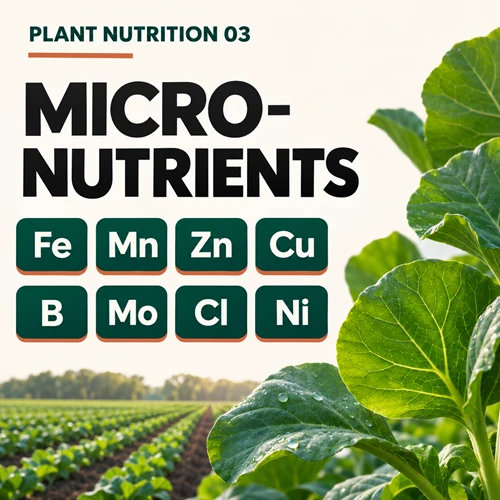
Plants require 17 essential elements. Carbon, hydrogen and oxygen come mainly from air and water. Roots obtain the other 14 mineral nutrients from the growing medium. This series follows the common fertilizer classification: nitrogen, phosphorus and potassium are primary nutrients; calcium, magnesium and sulfur are secondary nutrients; eight others are micronutrients. These categories describe the amounts needed, not their importance.
Nitrogen supports growth but can drive excessive foliage
Nitrogen is part of proteins, nucleic acids and chlorophyll. It helps a crop establish the leaf area needed to capture light and supports new growth. When nitrogen is short, older leaves often become uniformly pale before growth slows. However, waterlogged roots and root diseases can produce similar symptoms.
Long internodes, soft growth and an overly dense canopy warrant a review of nitrogen supply alongside light, irrigation and variety. Fruiting vegetables still need nitrogen to maintain productive leaves, so stopping it completely at fruit set is rarely a sound general rule. Adjust split applications to crop growth, harvest load and the nutrients already supplied by the soil.
Phosphorus supports energy transfer and early establishment
Phosphorus is involved in energy transfer and forms part of nucleic acids and cell membranes. Its role extends beyond the familiar claims about roots and flowers. Poor early growth or purple leaves in some crops may indicate limited phosphorus uptake, but cold soil, genetics and other stresses can cause similar appearances.
Because phosphorus moves relatively little in soil, placement near the developing root zone matters. Avoid direct contact between concentrated fertilizer and seed or tender roots. Fields receiving manure or high phosphorus fertilizers for years may already have substantial reserves. Where soil phosphorus is sufficient, another high phosphorus feed does not automatically produce more flowers and can interfere with zinc nutrition.
Potassium supports water regulation and sugar transport
Potassium helps regulate stomata, activates enzymes and supports the movement of sugars within the plant. Its supply deserves attention during fruit filling and grain development. However, adequate potassium cannot compensate for poor light, excessive crop load or erratic watering, and a high potassium fertilizer does not guarantee sweeter or better colored fruit.
Possible deficiency signs include yellowing and later scorching along the edges of older leaves. Drought, salinity and disease can look similar. Excessive potassium applications can raise root zone salinity and interfere with magnesium and calcium uptake. If older leaves develop interveinal yellowing after repeated high potassium feeding, investigate magnesium supply as well.

Read the nutrient analysis before choosing a formula
On a conventional NPK label, 15-15-15 normally represents the percentage by weight of nitrogen, phosphate expressed as P2O5, and potash expressed as K2O. These are not three elemental nutrient percentages. A 20 kg bag supplies 3 kg of nitrogen, 3 kg of P2O5 equivalent and 3 kg of K2O equivalent. Confirm the reporting basis before comparing products or calculating rates.
For compound and water soluble fertilizers, also check application suitability, solubility, nitrogen forms and the other nutrients included. Start with a seasonal nutrient budget, then account for manure, basal fertilizer and other inputs. A formula described as suitable for seedlings or fruit filling still needs to fit the actual soil test and crop condition.
Check the field before changing the feed
Compare affected and healthy areas. Examine roots, drainage, moisture and recent fertilizer records, and note whether symptoms started on young or old leaves. When testing is needed, collect representative soil and plant samples before treatment, following the laboratory instructions. Assess correction through new growth and subsequent crop performance; badly damaged older leaves may never recover.
Continue the series
Primary nutrients provide the foundation, but they do not explain every crop disorder. In the next article, we examine calcium, magnesium and sulfur, including why blossom end rot can develop even when soil calcium is adequate.

Series links:
Part 2: How Calcium Magnesium and Sulfur Support Healthy Crops
Part 3: How to Identify and Correct Micronutrient Deficiencies
Further reading:
Essential plant nutrients
https://nevegetable.org/Cultural-Practices/plant-nutrients
Nitrogen management principles
https://nevegetable.org/cultural-practices/nitrogen
Plant nutrients in the soil
https://www.dpird.nsw.gov.au/agriculture/soils/soil-testing-and-analysis/plant-nutrients
Soils and plant nutrients
https://content.ces.ncsu.edu/extension-gardener-handbook/1-soils-and-plant-nutrients
To discuss a formulation, request a sample or learn more about OEM services, contact us: