Standard Production Process for Water-Soluble Fertilizers
Consistent water-soluble fertilizer begins with a controlled production process. From raw-material preparation and formulation to quality inspection, packaging and storage, every stage influences the consistency, solubility and reliability of the finished product.
This article introduces the main stages in a standard water-soluble fertilizer production process.
1. Raw Material Control
Production begins with the identification and inspection of incoming raw materials.
The condition, batch information and relevant specifications of each material should be checked before it enters production. Proper storage and clear material identification also help prevent contamination or incorrect material use.
The exact inspection requirements depend on the fertilizer formulation and the manufacturer's quality-control system.
2. Formula Confirmation and Weighing
Different crops, growth stages and application methods require different nutrient formulations.
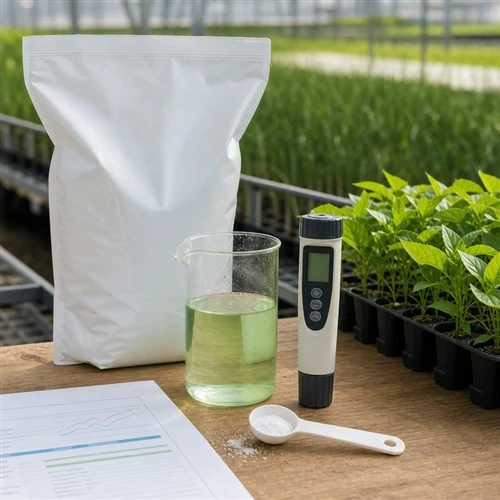
Before production begins, the approved formula and production instructions are confirmed. Each ingredient is then measured according to the required specifications.
Accurate weighing is important because variations in nitrogen, phosphorus, potassium, secondary nutrients or trace elements can affect the final nutrient profile and product consistency.
3. Material Preparation and Transfer
The measured materials are introduced into the production system according to the established operating sequence.
Depending on the formulation and physical condition of the raw materials, preparation may include screening, controlled feeding or other pretreatment steps. Materials are then transferred to the mixing system while minimizing contamination and unnecessary material loss.
The equipment and operating sequence may vary between powder and liquid water-soluble fertilizer production lines.
4. Controlled Mixing
Mixing is one of the most important stages in fertilizer production.
The objective is to distribute the ingredients evenly throughout the batch. Mixing time, equipment condition, material characteristics and feeding sequence should all be controlled.
For powder fertilizers, proper mixing supports uniform nutrient distribution throughout the packaged product. For liquid formulations, controlled processing helps maintain a stable and consistent solution or suspension.
5. Sampling and Quality Inspection
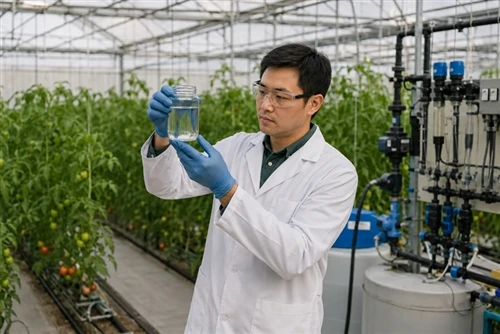
After processing, representative samples are collected for quality inspection.
The production and quality-control teams review the batch against the relevant product specifications. Testing requirements depend on the product category and may include nutrient content, appearance, moisture, pH, density, solubility or other technical indicators.
Only batches that meet the specified requirements should be approved for packaging.
6. Filling and Packaging
Once the batch has been released, the finished fertilizer enters the filling and packaging stage.
Automated or controlled packaging equipment helps maintain consistent filling quantities. Packages are then securely sealed and marked with the necessary product and batch information.
Packaging specifications may vary according to product type, order quantity and destination-market requirements. For export and private-label orders, bottle sizes, bags, cartons, labels and pallet configurations can be customized.
7. Batch Identification and Storage
Clear batch identification supports product traceability throughout production, storage and delivery.
Finished products are organized in the warehouse according to batch and order information. Before shipment, the packaging, labels, carton markings and quantities should be checked against the customer's requirements.
Appropriate storage conditions also help protect the product from moisture, contamination and package damage.
Quality and Documentation for Export Orders
International fertilizer supply requires more than production and packaging. Product information and supporting documents must also be prepared according to customer and destination-market requirements.
LVT provides export and customization services including:
- OEM and private-label production
- Customized packaging specifications
- Multilingual label support
- Technical specifications
- Certificates of Analysis
- MSDS documentation
- Export carton and pallet configuration
- Registration-document support
- Requirements may differ by country, so final specifications, labels and documentation should be confirmed before production.
Conclusion
A reliable water-soluble fertilizer production process depends on control at every stage-from formulation and material preparation to inspection, packaging and storage.
Standardized procedures, appropriate equipment, batch identification and quality inspection help support consistent products and dependable supply.
LVT works with distributors, agricultural brands and international partners to provide water-soluble fertilizer products, customized packaging and export support.
To discuss a formulation, request a sample or learn more about OEM services, contact us: