

Amino Acid Iron Chlorosis Support Fertilizer
1. Introduction
Yellow leaves are easy to notice. The reason behind them is often harder to pin down. A pale new flush may point the crop manager in one direction, while older leaves fading after several wet days may point somewhere else entirely. Root damage, high substrate pH, cold conditions, salinity, disease, and nutrient availability can produce overlapping field symptoms.
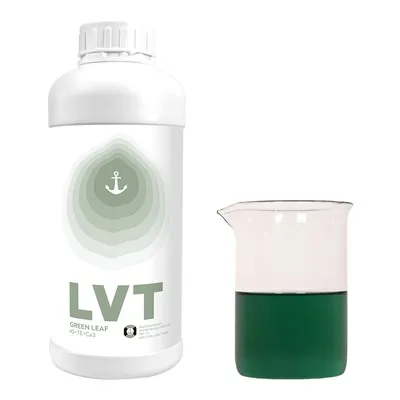
LVT Amino Acid Iron Chlorosis Support Fertilizer is intended for situations where crop inspection and production records indicate that nutritional support should be part of the response. The formula contains iron and zinc alongside nitrogen, potassium, calcium, boron, amino acids, small peptides, organic matter, and Chinese herbal extracts. It is an amino acid chelated, dark turbid liquid with a density of 1.28 g/mL and a pH of 8.0 ± 0.5.
Four delivery routes are confirmed: foliar spraying, root drenching, drip irrigation, and aerial application. Choosing among them should follow the crop, the location of the suspected limitation, available equipment, and the urgency of field operations. The product should not be sold as a universal cure for yellow foliage.
2. Yellow Leaves Are a Symptom, Not a Diagnosis
A useful field check starts with location. Is the color change appearing first on the newest leaves, the oldest leaves, or the entire plant? Is the leaf uniformly pale, or is the tissue between the veins lighter while the veins remain greener? Does the pattern repeat across a block, collect in low areas, or follow an irrigation line?
Those details matter because nutrients move differently within plants, and because many non-nutritional problems imitate deficiency. Waterlogged roots can limit uptake even when the soil contains enough nutrients. A high-pH root zone can reduce iron availability. Damaged feeder roots, poor aeration, cool soil, herbicide injury, and vascular disease can also change canopy color.
Before treatment, compare affected plants with healthy plants from the same variety and growth stage. Check irrigation history, root condition, recent weather, spray records, and root-zone pH. Tissue or sap analysis can add evidence when the value of the crop justifies testing. This short investigation gives the application a clearer purpose than spraying every pale leaf with the same mixture.
3. Technical Data & Specifications
| Item | Specification |
|---|---|
| Nitrogen (N) | ≥100 g/L |
| Potassium Oxide (K2O) | ≥20 g/L |
| Iron (Fe) | ≥6 g/L |
| Zinc (Zn) | ≥7.25 g/L |
| Boron (B) | ≥4.2 g/L |
| Calcium (Ca) | ≥4.75 g/L |
| Amino Acids (AA) | ≥110 g/L |
| Small Peptides (SP) | ≥60 g/L |
| Organic Matter (OM) | ≥160 g/L |
| Chinese Herbal Extracts (CHE) | ≥50 g/L |
| Chelation Technology | Amino acid chelation |
| Physical Form | Turbid liquid |
| Appearance | Dark turbid liquid |
| Density | 1.28 g/mL |
| pH | 8.0 ± 0.5 |
| Standard Package | 1 L bottle |
| Confirmed Application Routes | Foliar spray, root drench, drip irrigation, and aerial application |
4. Why This Is More Than an Iron Bottle
Iron is a visible part of the product story, but it is not the largest component of the formula. The concentrate contains 110 g/L amino acids, 60 g/L small peptides, 160 g/L organic matter, and 50 g/L Chinese herbal extracts. These figures describe a multicomponent liquid rather than a stand-alone iron salt.
Zinc is declared at 7.25 g/L, slightly higher than iron at 6 g/L. Boron and calcium are present at 4.2 g/L and 4.75 g/L. Their inclusion is relevant when reviewing the complete nutrient plan, especially if another zinc, boron, or calcium product has already been scheduled. Repetition can matter as much as a single application rate.
Nitrogen is supplied at 100 g/L and potassium oxide at 20 g/L. The nitrogen contribution deserves attention on crops that are already growing vigorously or are approaching a stage where excess vegetative growth is undesirable. This is one reason to read the complete analysis rather than select the product on the word "iron" alone.
Amino acid chelation is the stated formulation method. It identifies how the nutrient package is prepared, but it does not by itself prove a specific uptake rate, response time, or yield increase. Those outcomes depend on the crop, the actual cause of yellowing, timing, weather, water quality, and application coverage.

5. A Short Diagnostic Walk Before Treatment
Take the same route through the block that irrigation water or machinery follows. This often exposes patterns that are missed when only a few convenient plants are examined.
- Mark several affected plants and several normal-looking plants nearby.
- Photograph the same leaf positions, including one wider image that shows the surrounding row.
- Note whether symptoms begin on young or old leaves and whether veins remain green.
- Inspect feeder roots where practical. White or cream growing tips tell a different story from brown, soft, or sparse roots.
- Review irrigation uniformity, recent rainfall, drainage, and root-zone pH.
- Check the total nitrogen, zinc, iron, boron, and calcium already supplied that season.
- If the pattern is irregular or associated with lesions, wilting, insects, or vascular discoloration, investigate pest or disease causes before relying on fertilizer.
6. Choose the Route That Matches the Production System
Foliar application places a diluted solution directly on the canopy. It is suited to a targeted pass where upper and lower leaf coverage can be achieved. Dense canopies require attention to nozzle direction, droplet size, travel speed, and total carrier volume. Increasing concentration is not a substitute for reaching the leaf surface.
Root drenching is a plant-by-plant method. It can be practical in nurseries, greenhouses, high-value orchards, or isolated zones where the root area needs individual treatment. The diluted solution should move through the active root zone rather than pool against the stem.
Drip irrigation is the broadest root-zone route listed for this product. One bottle is used per mu. The irrigation volume is not fixed here because line spacing, emitter output, soil texture, substrate, and crop rooting depth vary widely. The concentrate should be introduced through a clean system and followed with enough water to distribute the input and rinse the lines.
Aerial application covers 5-10 mu per bottle. Actual carrier volume, flight height, droplet spectrum, and operating conditions must match the aircraft, crop canopy, local rules, and operator's approved practice. Aerial use is a delivery option, not permission to disregard wind, buffer zones, or crop sensitivity.
7. Application Directions
| Application Method | Confirmed Rate | Field Objective and Notes |
|---|---|---|
| Foliar spraying | Dilute 1:500-1,000 | Spray the upper and lower leaf surfaces evenly. Avoid heavy runoff. |
| Root drenching | Dilute 1:300-500 | Apply around each plant until the solution reaches the lower part of the active root zone. Avoid pooling at the stem. |
| Drip irrigation | 6 L bottle per acre | Pre-dilute before injection. Determine irrigation water volume from the field system and root-zone target. |
| Aerial application | 1 L bottle for 1-1.4 acre | Use an approved agricultural aircraft and a carrier volume suited to the crop, canopy, equipment, and local operating rules. |
The recommendations above represent the most suitable application methods and rates for this product. If you plan to use a different fertilization method, please contact us for specific guidance.
Foliar Dilution Reference
| Final Water Volume | Product at 500x | Product at 1,000x |
|---|---|---|
| 15 L | 30 mL | 15 mL |
| 20 L | 40 mL | 20 mL |
| 100 L | 200 mL | 100 mL |
| 500 L | 1.00 L | 500 mL |
| 1,000 L | 2.00 L | 1.00 L |
Root Drench Dilution Reference
| Final Water Volume | Product at 300x | Product at 500x |
|---|---|---|
| 15 L | 50 mL | 30 mL |
| 20 L | 66.7 mL | 40 mL |
| 100 L | 333.3 mL | 200 mL |
| 500 L | 1.67 L | 1.00 L |
| 1,000 L | 3.33 L | 2.00 L |
For a new crop, variety, water source, or spray program, begin with the more dilute end of the confirmed range and treat a small area first. Inspect the crop before extending the application.
8. Managing a Dark Turbid Formulation
The concentrate is intentionally described as a dark turbid liquid. Opacity is part of its physical identity and should not be rewritten as a clear solution. Turbid products deserve more preparation than a quick pour into a full tank.
Roll or shake the closed bottle before measuring. Start with a clean tank, clean filters, and unobstructed nozzles. Half-fill the tank with water, begin agitation, and add the measured product slowly. Pre-dilution in a separate container is useful when the injection point is narrow or the equipment uses fine filtration. Keep the mixture moving during preparation and application.
Water quality can change tank behavior. Before combining the fertilizer with a pesticide, another fertilizer, an adjuvant, or a plant growth regulator, use the actual water source to conduct a jar test at the planned proportions. Do not use the mixture if it develops flakes, heavy sediment, separation, unusual heat, or excessive foam. A physically stable jar test should be followed by a small crop-safety test when the combination is new.
For drip or aerial equipment, confirm that filters, pumps, tubing, nozzles, and atomizers can handle the prepared liquid. Flush the system with clean water after application. No blanket clog-free claim should be made without equipment-specific testing.
9. What to Record After Application
Return to the marked plants rather than searching for the best-looking leaves in the block. Photograph the same leaf positions under similar light, and record new growth separately from leaves that were already expanded at treatment. Existing tissue may not change in the same way as leaves that develop later.
Keep notes on date, crop stage, field zone, route, dilution or area rate, water volume, tank partners, weather, and irrigation after treatment. If canopy color changes, compare it with the untreated reference plants and with root-zone conditions. If symptoms continue to spread, revisit the diagnosis instead of automatically increasing the dose.
Store the 1 L bottle tightly closed in a cool, dry, ventilated location away from direct sunlight, freezing, excessive heat, food, and animal feed. Because the product is turbid, inspect the bottle and redisperse the concentrate before use. Label language, carton configuration, OEM presentation, and supporting documents can be discussed for the destination market.
For purchasing and document control, the current specification states N ≥100 g/L and Zn ≥7.25 g/L. Quotations, labels, technical sheets, and COA discussions should all reference the same approved version so that the nutrient declaration remains consistent from sample review through production.
10. FAQ
1. Will this product correct yellowing caused by disease or waterlogging?
Not by itself. Disease, damaged roots, poor aeration, waterlogging, salinity, and other stresses can produce yellow foliage or restrict nutrient uptake. Identify and manage the underlying condition as part of the response.
2. Why does the age and pattern of the affected leaf matter?
The position of symptoms provides useful diagnostic evidence. Pale young leaves, fading older leaves, uniform yellowing, and interveinal patterns can point toward different nutrient or root-zone issues. They should be reviewed with field history and, when practical, analytical testing.
3. Which foliar dilution is appropriate for a first application?
Start at 1:1,000 on a small area when the crop, variety, water source, or tank combination is new. Move toward the stronger end of the range only after crop tolerance and the production need have been reviewed.
4. How is the product used through drip irrigation?
Use one 1 L bottle per mu. Pre-dilute the concentrate and inject it through a clean, operating system. Set the water volume and injection period according to emitter output, soil or substrate, field size, and the intended root-zone distribution.
5. Can the dark turbid liquid clog application equipment?
Equipment suitability depends on dilution, filtration, agitation, nozzle or emitter design, and maintenance. Redisperse the concentrate, pre-dilute it, keep the tank moving, inspect filters, and flush the system after use.
6. Can it be mixed with pesticides or other fertilizers?
Compatibility is not universal. Test the planned mixture with the actual water source, add products separately, and observe the jar before filling the tank. Follow the most restrictive approved label and test a small crop area when the combination is unfamiliar.
Contact WEIFANG LVWEITE BIO-TECH CO., LTD. for:
- Product samples
- Technical data and COA
- MSDS
- OEM packaging
- Private-label production
- Export quotations
- Registration support
Hot Tags: amino acid iron chlorosis support fertilizer | lvt, China amino acid iron chlorosis support fertilizer | lvt manufacturers, suppliers, factory