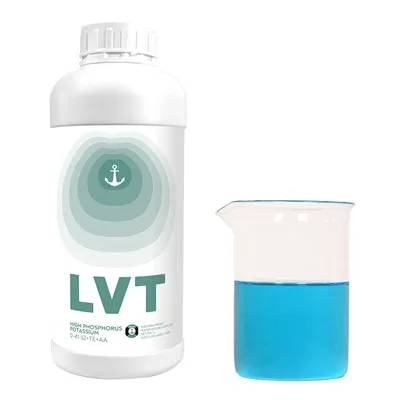
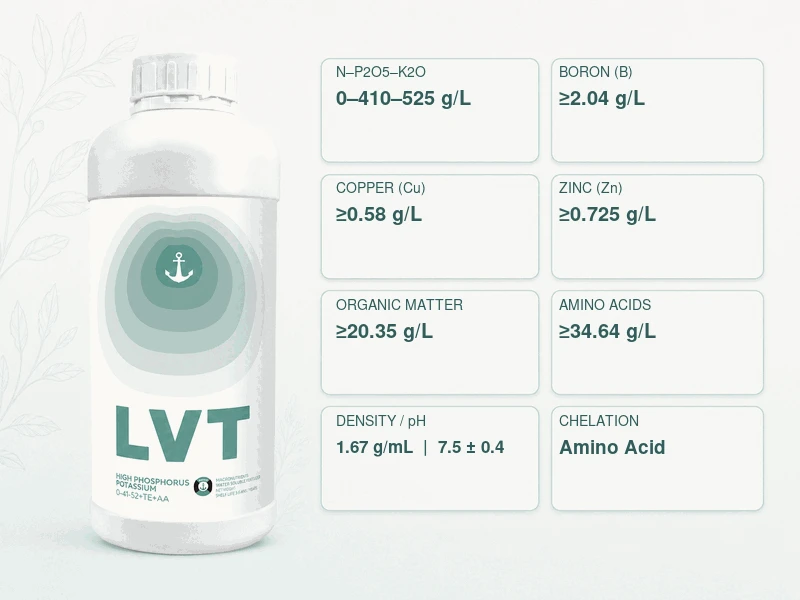
Zero-Nitrogen High-Phosphorus & Potassium Liquid Fertilizer 0-41-52 + TE + AA
1. Introduction
Some crop stages require additional phosphorus and potassium without increasing the nitrogen supply. This may occur after transplant establishment, before reproductive development or when the existing fertilizer program already provides sufficient nitrogen.
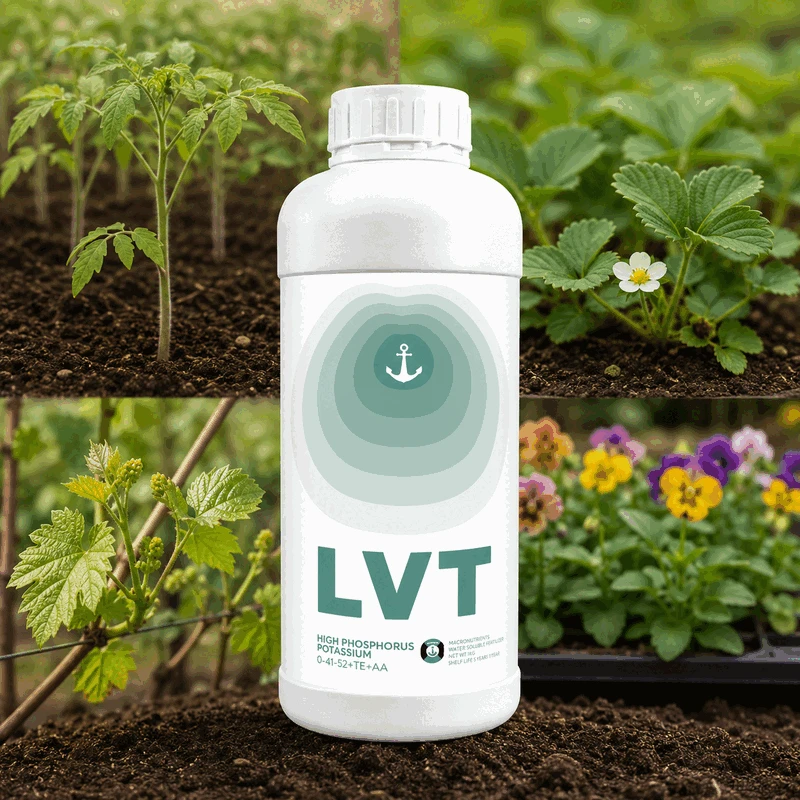
LVT High-Phosphorus & Potassium Liquid Fertilizer is a zero-nitrogen formula containing at least 410 g/L phosphorus pentoxide and 525 g/L potassium oxide. Its nutrient profile differs from a conventional flower booster because potassium remains the largest declared macronutrient component.
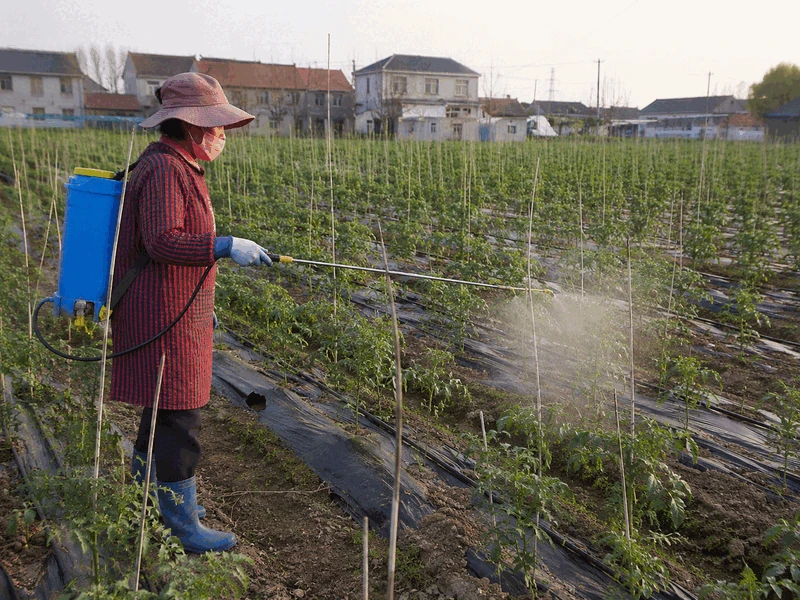
The formulation also contains boron, copper, zinc, amino acids and organic matter. Amino acid chelation is used as the declared chelation technology. The concentrated liquid has a density of 1.67 g/mL and a pH of 7.5 ± 0.4. It is applied as an 800–1,000-times diluted whole-canopy foliar spray.
2. Key Benefits
2.1 Zero-nitrogen positioning
The formula contains no declared nitrogen. It can therefore provide supplementary phosphorus and potassium without adding another nitrogen input to the crop program.
2.2 Concentrated phosphorus and potassium
Phosphorus pentoxide is supplied at 410 g/L, while potassium oxide reaches 525 g/L. This creates a concentrated PK profile rather than a balanced NPK formulation.
2.3 Potassium remains the leading macronutrient
Although the product is positioned as a high-phosphorus fertilizer, potassium is the largest macronutrient component. The page therefore presents it as a high-phosphorus and high-potassium formula rather than a phosphorus-only fertilizer.
2.4 Amino acid chelation
The declared chelation technology is amino acid chelation. This information describes the formulation method and should not be interpreted as a guarantee that every nutrient is completely chelated.
2.5 Supporting components
Boron, copper and zinc complete the declared trace-element profile. Amino acids and organic matter broaden the formulation beyond mineral phosphorus and potassium.
3. Technical Data & Specifications
| Item | Specification |
|---|---|
| Nitrogen (N) | 0 g/L |
| Phosphorus Pentoxide (P₂O₅) | ≥410 g/L |
| Potassium Oxide (K₂O) | ≥525 g/L |
| Boron (B) | ≥2.04 g/L |
| Copper (Cu) | ≥0.58 g/L |
| Zinc (Zn) | ≥0.725 g/L |
| Organic Matter (OM) | ≥20.35 g/L |
| Amino Acids (AA) | ≥34.64 g/L |
| N–P₂O₅–K₂O Relationship | 0–410–525 g/L |
| Chelation Technology | Amino acid chelation |
| Formulation | Concentrated liquid |
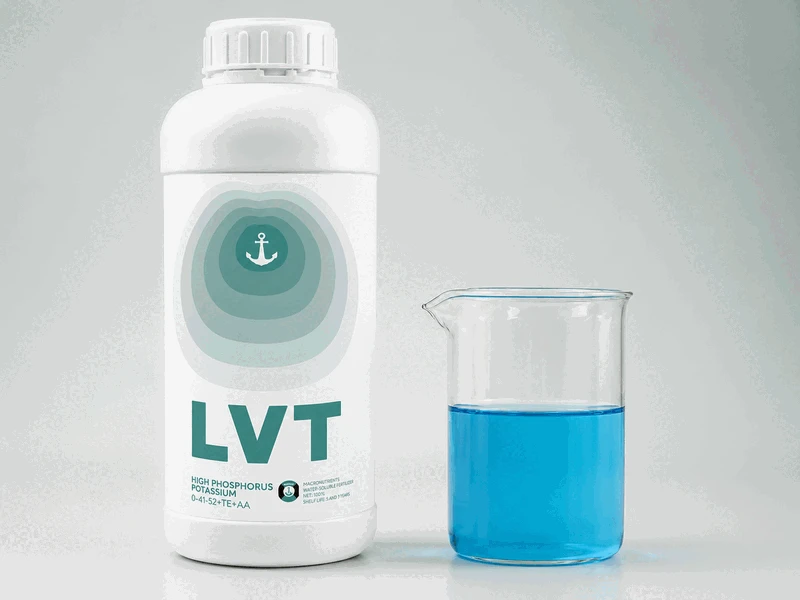
| Reference Appearance | Blue clear liquid |
| Density | 1.67 g/mL |
| pH | 7.5 ± 0.4 |
| Application Method | Whole-canopy foliar spraying |
| Available Service | OEM and private label |
4. Position in the Nutrition Program
4.1 After crop establishment
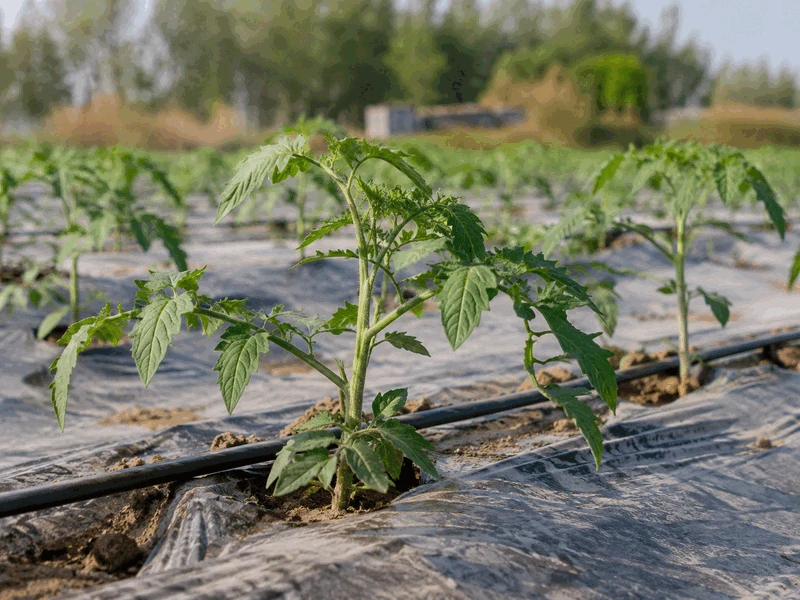
The product may be considered after seedlings or transplants have established and the fertilizer program requires additional phosphorus and potassium. It should not be presented as a treatment for damaged roots or severe transplant stress.
4.2 Before reproductive development
For flowering and fruiting crops, the formula may be introduced when the program begins moving away from strongly nitrogen-led nutrition. Timing should follow visible crop development rather than a fixed calendar date.
4.3 Where nitrogen is already sufficient
The zero-nitrogen profile may be useful when nitrogen has already been supplied through soil fertilizer, fertigation or previous applications. Total nutrient inputs should still be reviewed before spraying.
4.4 As a stage-specific supplement
This product is not intended to replace a complete base-fertilizer program. Its concentrated PK profile makes it more appropriate for selected crop stages than for continuous use throughout the whole season.
5. Application Directions
| Application Method | Dilution Ratio | Application Stage | Application Guidance |
|---|---|---|---|
| Whole-canopy foliar spraying | 1:800–1,000 | Apply according to crop stage and nutrient requirements | Spray the foliage evenly with a fine mist, avoiding excessive runoff |
The recommendations above represent the most suitable application methods and rates for this product. If you plan to use a different fertilization method, please contact us for specific guidance.
6. Dilution Reference
| Water Volume | Product Required at 800× | Product Required at 1,000× |
|---|---|---|
| 15 L | 18.75 mL | 15 mL |
| 20 L | 25 mL | 20 mL |
| 100 L | 125 mL | 100 mL |
| 500 L | 625 mL | 500 mL |
| 1,000 L | 1.25 L | 1 L |
For a new crop, sensitive variety or first application, begin at the 1,000× dilution and test a limited area before treating the entire production block.
7. Suitable Crops
7.1 Fruiting vegetables
- Tomato
- Pepper
- Cucumber
- Eggplant
- Melon and watermelon
7.2 Fruit and berry crops
- Strawberry
- Grapes
- Citrus
- Apple, pear and stone fruit
- Other orchard crops managed with stage-specific foliar nutrition
7.3 Field and commercial crops
- Beans and other flowering field crops
- Crops receiving sufficient nitrogen from the existing fertilizer program
- Transplanted crops after establishment
7.4 Flowers and ornamentals
- Cut flowers
- Potted flowering plants
- Commercial flower seedlings
- Nursery crops approaching reproductive development
8. Foliar Application Guidance
Apply the diluted solution as a fine, even mist across the canopy. The objective is to wet the foliage uniformly without allowing large droplets to run from the leaves.
Morning or late-afternoon application is generally preferable. Avoid spraying during intense sunlight, high temperatures, strong wind or immediately before rainfall.
The required spray-water volume depends on crop height, planting density, canopy structure and equipment. Calibrate the sprayer before use rather than relying only on tank capacity.
Avoid spraying open flowers while pollinating insects are active. For sensitive crops or unfamiliar varieties, complete a small-area crop-safety test first.

9. Mixing and Compatibility
High-phosphorus formulations require careful compatibility management.
- Use clean water and a clean spray tank.
- Fill the tank with approximately half of the required water.
- Add the measured fertilizer gradually while maintaining agitation.
- Pre-dilute other products separately.
- Conduct a jar test using the intended water and mixing proportions.
- Complete the tank volume after compatibility is confirmed.
- Apply the prepared solution during the same working period.
- Rinse the tank, filters and nozzles after spraying.
•Do not combine the concentrated product directly with concentrated calcium fertilizers. Calcium and phosphate may form insoluble precipitates. Separate application is preferable unless compatibility has been confirmed.
•Do not use a mixture that develops persistent cloudiness, crystals, sediment, separation, excessive foam or abnormal heat.
10. Storage and Handling
Store the product in its original tightly closed container in a cool, ventilated place. Protect it from direct sunlight, freezing conditions and excessive heat.
Keep the fertilizer separate from food, animal feed and drinking water. Wear suitable protective clothing, gloves and eye protection when measuring, mixing and spraying. Follow the current product label and MSDS.
11. Packaging and Export Supply
Available export services include:
- OEM and private-label production
- Customized bottle and carton specifications
- Multilingual label preparation
- Product samples
- Technical specifications
- Certificate of Analysis
- MSDS documentation
- Registration-document support
- Export carton and shipping-mark customization
Final packaging specifications should be confirmed according to order quantity, production feasibility and destination-market requirements.
12. FAQ
12.1 Does 0-41-52 represent percentage by weight?
Not automatically. The confirmed analysis is expressed in grams per litre: N 0 g/L, P₂O₅ ≥410 g/L and K₂O ≥525 g/L.
12.2 Why does the formula contain no nitrogen?
It is designed to provide concentrated phosphorus and potassium without adding nitrogen. This can suit stages when sufficient nitrogen is already available from other fertilizer inputs.
12.3 Can it be used immediately after transplanting?
Application timing depends on crop condition and establishment. Avoid spraying severely stressed or poorly rooted transplants. For young plants, begin at 1,000× dilution and test a small area.
12.4 What does amino acid chelation mean?
Amino acid chelation is the declared formulation technology. It describes the use of amino acids as chelating or complexing components and does not establish that every nutrient is fully chelated.
12.5 Can it be mixed with calcium fertilizer?
Concentrated calcium and phosphate products may form precipitates. Separate application is generally safer unless compatibility has been confirmed through technical data and a jar test.
12.6 Can the formula or packaging be customized?
Yes. Formula details, bottle specifications, label language and export cartons can be discussed according to order quantity, technical feasibility and market requirements.
Contact WEIFANG LVWEITE BIO-TECH CO., LTD. for:
- Product samples
- Technical data and COA
- MSDS
- OEM packaging
- Private-label production
- Export quotations
- Registration support
Hot Tags: high-phosphorus potassium fertilizer 0-41-52 + aa | lvt, China high-phosphorus potassium fertilizer 0-41-52 + aa | lvt manufacturers, suppliers, factory, Fertilizer for fruit sweetness, High Phosphorus Water Soluble Fertilizer for Root Development, High potassium fertilizer, NPK fertilizer high nitrogen formula, Root growth fertilizer, Water soluble phosphorus fertilizer