

High-Nitrogen Liquid Fertilizer for Vegetative Growth
1. Introduction
Nitrogen demand is usually highest while crops are building leaves, stems and canopy structure. During this stage, the fertilizer program needs to match the crop's actual growth rate without extending high-nitrogen feeding into stages where flowering, fruit development or maturation becomes the priority.
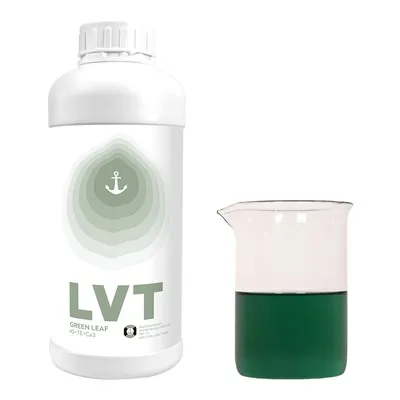
LVT High-Nitrogen Liquid Fertilizer contains at least 400 g/L nitrogen. The formula is supported by 30 g/L calcium, 1.4 g/L zinc, 0.5 g/L boron and 0.2 g/L copper. It is intended for leafy vegetables, young field crops, commercial nurseries, turfgrass and other crops managed for active vegetative development.
The concentrated liquid has a density of 1.36 g/mL and a pH of 6.0±0.5. It should be incorporated into a crop-specific nutrition program based on growth stage, soil fertility, irrigation-water quality and nitrogen already supplied through base fertilizers.
2. Key Benefits
2.1 Concentrated nitrogen input
Nitrogen is the dominant nutrient at 400 g/L. This concentration allows the product to provide a defined nitrogen input without positioning it as a general-purpose balanced fertilizer.
2.2 Designed for vegetative stages
The nutrient profile is most relevant when leaves and stems are developing actively. It may be considered for leafy crops, young transplants, early-stage field crops and turf managed for continued leaf growth.
2.3 Calcium included in the formula
Calcium is supplied at 30 g/L. It contributes to the crop's overall calcium program while new plant tissues are forming, but it should not be treated as a replacement for all soil- or root-applied calcium inputs.
2.4 Zinc, boron and copper
The formula includes three declared micronutrients. Their contribution should be evaluated together with soil analysis, crop-tissue results and other micronutrient fertilizers used during the season.
2.5 Flexible commercial positioning
The product can be included in crop-stage fertilizer ranges aimed at leafy vegetables, nurseries, turfgrass and early vegetative growth. OEM formulation, labeling and export-document services can be discussed according to order requirements.

3. Technical Data & Specifications
| Item | Specification |
|---|---|
| Nitrogen (N) | ≥400 g/L |
| Calcium (Ca) | ≥30 g/L |
| Copper (Cu) | ≥0.2 g/L |
| Boron (B) | ≥0.5 g/L |
| Zinc (Zn) | ≥1.4 g/L |
| Formulation | Concentrated liquid |
| Density | 1.36 g/mL |
| pH | 6.0±0.5 |
| Nutrient Positioning | High nitrogen with calcium and trace elements |
| Available Service | OEM and private label |
4. Position in the Crop Cycle
4.1 After establishment
The product may be considered after seedlings or transplants have established and the crop begins building new leaves and stems. Applications should not be used to compensate for poor root establishment, waterlogging or unsuitable temperatures.
4.2 During active leaf development
Leafy vegetables and managed turf may continue to require nitrogen while leaf production remains the main commercial objective. Rates and frequency should still reflect crop sensitivity and the total seasonal nitrogen supply.
4.3 Early growth of field crops
Young corn and other field crops may require additional nitrogen during vegetative development. The decision should be based on crop stage, soil fertility and the nitrogen already applied through base or topdressing fertilizers.
4.4 Before reproductive development
For flowering and fruiting crops, the nutrient ratio should be reassessed as the crop approaches bud formation. Continuing with a strongly nitrogen-led formula may no longer match the intended balance between vegetative and reproductive growth.
5. Application Directions
| Application Method | Dilution Ratio | Typical Interval | Application Guidance |
|---|---|---|---|
| Foliar Spraying | 1:300–500 | Every 7–10 days | Spray the foliage evenly without excessive runoff |
The recommendation above represent the most suitable application methods and rates for this product. If you plan to use a different fertilization method, please contact us for specific guidance.
6. Suitable Crops
6.1 Leafy vegetables
- Lettuce
- Pak choi and Chinese cabbage
- Spinach
- Celery
- Kale and other leafy brassicas
- Leafy herbs grown for fresh foliage
6.2 Field crops during vegetative growth
- Young corn
- Wheat and other cereals where additional nitrogen is required
- Forage crops
- Other field crops managed according to soil and crop analysis
6.3 Nursery and protected crops
- Vegetable seedlings after establishment
- Commercial nursery plants
- Greenhouse crops during vegetative development
- Substrate-grown crops with controlled feeding programs
6.4 Turf and ornamental foliage
- Commercial turfgrass
- Landscape foliage plants
- Ornamental plants grown primarily for leaf development
High-nitrogen feeding may not be appropriate during flowering, fruit coloring, ripening or preparation for dormancy. The crop stage should be reviewed before application.
7. Mixing and Compatibility
Shake or mix the product before measuring. When preparing a new fertilizer mixture:
- Use clean water and a clean tank.
- Add part of the required water before introducing the fertilizer.
- Add the measured product gradually while maintaining agitation.
- Pre-dilute other inputs separately.
- Conduct a jar test using the intended water and mixing proportions.
- Complete the tank volume only after compatibility is confirmed.
- Use the prepared mixture within the same working period.
- Rinse tanks, filters and application equipment after use.
Because the formula contains calcium, extra care is required when combining it with concentrated phosphate- or sulfate-containing fertilizers. Separate application is preferable unless compatibility has been established.
Do not use a mixture that develops persistent cloudiness, sediment, separation, excessive foam or abnormal heat!
8. Practical Use Considerations
A dark-green crop canopy does not automatically indicate an optimum nitrogen status. Excessive nitrogen may produce overly soft vegetative growth, delay reproductive development or create an imbalance with other nutrients.
Review the complete nitrogen supply from:
- Soil reserves and organic matter
- Base fertilizer
- Fertigation products
- Foliar fertilizers
- Irrigation water
- Previous crop residues
When using the product on a new crop or cultivar, begin with a limited-area test after the application rate has been confirmed.
9. Storage and Handling
Store the product in its original closed container in a cool, ventilated place. Protect it from direct sunlight, freezing conditions and excessive heat.
Keep it separate from food, animal feed and drinking water. Wear suitable protective equipment when measuring, mixing and applying the fertilizer. Follow the current product label and MSDS.
10. Packaging and Export Supply
Packaging can be confirmed according to production feasibility, order quantity and destination-market requirements.
Available services include:
- OEM and private-label production
- Customized bottle and carton specifications
- Multilingual label preparation
- Product samples
- Technical specifications
- Certificate of Analysis
- MSDS documentation
- Registration-document support
- Export carton and shipping-mark customization
11. FAQ
11.1 Is this product suitable for the entire crop cycle?
Not usually. Its nitrogen-led profile is primarily intended for active vegetative growth. Flowering, fruit development and ripening stages may require a different nutrient balance.
11.2 Can it be used continuously on leafy vegetables?
The appropriate frequency depends on crop duration, growing medium, irrigation method and total nitrogen input. Continuous use should not be recommended without considering the complete fertilizer program.
11.3 Does 40+TE+Ca3 mean 40% nitrogen and 3% calcium?
Not automatically. The confirmed analysis is expressed in grams per litre: nitrogen ≥400 g/L and calcium ≥30 g/L.
11.4 Can it be mixed with phosphate fertilizer?
Calcium may react with concentrated phosphate fertilizers and form precipitates. Separate application is safer unless compatibility has been confirmed through formulation data and a jar test.
11.5 Is it suitable for correcting yellow leaves?
Leaf yellowing may result from nitrogen deficiency, root damage, waterlogging, unsuitable pH, disease or other nutrient problems. The cause should be identified before selecting a fertilizer.
11.6 Can the formula and packaging be customized?
Yes. Formula, bottle, label language and carton presentation can be discussed according to order quantity, technical feasibility and destination-market requirements.
Contact WEIFANG LVWEITE BIO-TECH CO., LTD. for:
- Product samples
- Technical data and COA
- MSDS
- OEM packaging
- Private-label production
- Export quotations
- Registration support
Hot Tags: high-nitrogen liquid fertilizer 400 g/l n + ca & te | lvt, China high-nitrogen liquid fertilizer 400 g/l n + ca & te | lvt manufacturers, suppliers, factory, Fertilizer for fruit sweetness, High nitrogen fertilizer, High Phosphorus Water Soluble Fertilizer for Root Development, Nitrogen fertilizer for leafy vegetables, Potassium fertilizer for fruit quality, Root growth fertilizer