

Root-Knot Management Humic Fulvic Powder Fertilizer
1. Introduction
Root-knot problems are rarely distributed evenly across an entire field. They often begin as patches of weaker growth, midday wilting, uneven canopy color, or plants that respond poorly to an otherwise adequate fertilizer program. Similar symptoms can also result from restricted drainage, salinity, root injury, or an uneven irrigation system. Root inspection and field mapping should therefore come before a treatment decision.
LVT Root-Knot Management Humic Fulvic Powder Fertilizer is formulated as a root-zone input for these managed situations. The composition includes 30% specialized Chinese herbal extracts, 20% humic acid, 15% fulvic acid, 4.41% magnesium, and a defined group of trace elements. The confirmed delivery methods are drip irrigation, flush irrigation, and sprinkler irrigation.
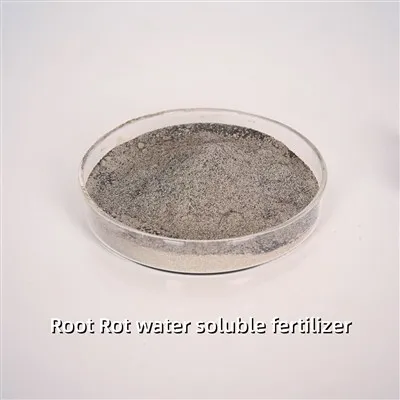
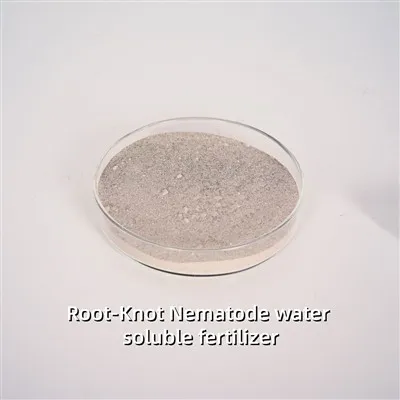
The product is a gray-brown powder with a pH of 8.0 +/- 0.5 and a standard package size of 2 kg. It should be positioned as one component of a program that may also include diagnostic testing, crop rotation, resistant varieties, irrigation correction, sanitation, and locally registered plant-protection measures when required.
2. Map the Affected Zone Before Treatment
Treating every row identically can waste product and make the result difficult to evaluate. Begin by marking weak patches, row ends, wet areas, previous crop locations, and sections with different soil texture. Compare the pattern with irrigation pressure and emitter output.
Inspect Representative Roots
Lift plants from the edge of an affected patch rather than selecting only the most severely damaged specimen. Wash the soil away gently and examine both fine roots and larger roots. Root-knot symptoms may include localized swellings or galls, but a visual inspection alone does not identify the nematode species or population density.
Separate Root-Knot Risk from Water-Related Stress
Standing water, compacted soil, blocked emitters, concentrated fertilizer, and damaged feeder roots can produce similar above-ground symptoms. Check soil moisture at more than one depth and compare healthy and weak sections before deciding where the product belongs.
Establish a Treatment Boundary
Record the treated acreage and mark fixed observation points. Where practical, keep a comparable untreated reference area under the same irrigation and base-fertilizer conditions. This produces more useful information than relying on general impressions after application.
3. Technical Data & Specifications
| Item | Specification |
|---|---|
| Fulvic Acid (FA) | 15% |
| Humic Acid (HA) | 20% |
| Magnesium (Mg) | 4.41% |
| Iron (Fe) | 0.32% |
| Zinc (Zn) | 0.39% |
| Manganese (Mn) | 0.16% |
| Boron (B) | 0.16% |
| Copper (Cu) | 0.04% |
| Molybdenum (Mo) | 0.01% |
| Cobalt (Co) | 0.01% |
| Specialized Chinese Herbal Extracts | 30% |
| Formulation | Powder |
| Appearance | Gray-brown powder with occasional pale particles |
| pH | 8.0 ± 0.5 |
| Standard Package | 2 kg bag |
| Confirmed Application Methods | Drip irrigation, flush irrigation, and sprinkler irrigation |

4. How the Formula Is Structured
Organic Fractions Lead the Composition
Specialized Chinese herbal extracts account for 30% of the formula. Humic acid and fulvic acid add another 35%. These figures describe composition; they do not establish a pesticidal mode of action or a guaranteed reduction in nematode population.
Magnesium Is the Principal Declared Mineral
Magnesium is supplied at 4.41%, making it the largest declared mineral nutrient. It should be counted together with magnesium already present in irrigation water, base fertilizer, foliar products, and substrate amendments.
Trace Elements Require Program-Level Review
Zinc, iron, manganese, boron, copper, molybdenum, and cobalt are present at individually declared levels. Their inclusion broadens the nutritional profile, but repeated application should still account for soil test results, crop sensitivity, and overlapping micronutrient sources.
What Is Not Declared
The supplied data do not identify an NPK analysis, microbial species, viable count, or registered nematicidal active ingredient. Export labels, technical sheets, COA documents, and registration files should remain aligned with the confirmed specification.
5. Position the Application Around Crop and Field History
Before Planting or Transplanting
Where root-knot pressure has been confirmed in previous crops, the next program should begin with field history, soil sampling, sanitation, crop selection, and irrigation preparation. Product placement can then be planned for the active root zone rather than spread across untreated paths or dry soil.
During Early Root Establishment
Uniform irrigation and correct emitter placement are especially important after transplanting. If the product is included at this stage, avoid concentrating the solution around a small number of plants or injecting it into a system with uneven pressure.
When Patches Appear During Production
Map the affected area before treating it. Inspect roots from the edge of the patch, review water movement, and record recent fertilizer inputs. Applications should be paired with correction of blocked lines, excessive irrigation, or other field factors that limit root function.
Between Crop Cycles
Remove crop residues according to local practice, clean tools and equipment, and review which blocks showed the strongest symptoms. Product use should complement crop rotation, resistant rootstocks or varieties, sanitation, soil management, and registered controls rather than replace them.
6. Crop and Production-System Considerations
Fruiting Vegetables
Tomato, pepper, eggplant, cucumber, melon, and watermelon can be considered where root-zone risk has been identified. Protected cultivation requires particular attention to repeated cropping, irrigation uniformity, and movement of soil between greenhouse bays.
Berries and Perennial Fruit Systems
Strawberry and selected orchard or vine plantings may require a longer observation period than annual vegetables. Distinguish new root growth from old damaged tissue and avoid disturbing permanent root systems merely to create frequent visual checks.
Field and Nursery Crops
Beans, selected field crops, seedlings, and nursery stock may also be exposed to root-knot pressure. Rate selection should reflect the treated acreage, irrigation design, crop sensitivity, and the diagnostic confidence for that block.
Soil and Substrate Systems
The confirmed directions are area-based. Container, tray, and soilless-substrate programs require separate guidance because root volume and irrigation frequency cannot be converted reliably from a field rate alone.
7. Application Directions
| Application Method | Recommended Rate | Preparation and Placement | Approximate Coverage per 2 kg Bag |
|---|---|---|---|
| Drip irrigation | 3.04 kg/acre | Pre-dissolve, filter, and inject into a uniform drip system during the middle portion of the irrigation cycle. | 0.66 acre |
| Flush irrigation | 6.07 kg/acre | Dilute in sufficient carrier water and distribute evenly through the intended bed or root-zone area. | 0.33 acre |
| Sprinkler irrigation | 607 g/acre | Dissolve completely and filter before introducing the solution into the sprinkler system. | 3.30 acres |
The recommendations above represent the most suitable application methods and rates for this product. If you plan to use a different fertilization method, please contact us for specific guidance.
8. Dissolve, Filter, Inject, and Rinse
This powder should not be poured dry into an injector, filter housing, irrigation main, or sprinkler tank.
- Confirm the treated acreage and calculate the required product quantity from the selected application method.
- Fill a clean premix container with water and add the measured powder slowly while stirring.
- Continue mixing until the solution is uniform, then pass it through a screen suitable for the irrigation equipment.
- Begin the irrigation cycle with clean water and confirm that pressure and flow are stable across the treated block.
- Inject the filtered solution during the middle part of the cycle so that it reaches the active root zone without remaining concentrated near the inlet.
- Finish with clean water to move the solution through the lines and rinse the injector, filters, mains, laterals, or sprinkler components.
- Record the actual product amount, water volume, operating time, treated acreage, and any pressure differences observed.
For an unfamiliar tank combination, use the actual irrigation water to complete a small jar test. Do not proceed if the mixture produces persistent sediment, gel, separation, heavy foam, or unusual heat. Physical compatibility does not confirm crop safety or regulatory compatibility.
Request Irrigation-System Application Guidance
9. Verification, Storage, and Export Documentation
Recheck Fixed Observation Points
Return to the same marked plants or beds after application. Record canopy development, new fine-root growth, spread of weak patches, irrigation performance, and any changes made to the broader program. Existing root galls will not disappear simply because management has changed, so evaluation should focus on current crop development and new roots rather than cosmetic reversal of old damage.
Use Diagnostic Evidence Where Available
Laboratory soil or root testing can help determine whether root-knot nematodes are present and whether population pressure is changing. Product performance should not be described as nematode control unless the claim is supported by the registration and evidence required in the destination market.
Protect the Powder During Storage
Keep the 2 kg bag sealed, upright, and dry in a cool, ventilated place. Protect it from rain, condensation, direct sunlight, and prolonged heat. Close partially used bags promptly and keep the product separate from food, feed, and unauthorized users.
Keep Export Documents on One Specification
Private-label and export projects should align the approved label, technical data sheet, COA, MSDS, carton marking, and registration documents. Claims involving microbial inoculants, viable counts, nematicidal action, or disease treatment require separate confirmation before publication.
10. FAQ
1. Is This Product a Registered Nematicide?
The supplied specification does not identify a registered nematicidal active ingredient or provide a registration number. Market it as a root-zone management and nutritional input unless destination-market documentation supports a stronger claim.
2. Does the Formula Contain Live Microorganisms?
No microbial species, strain, viable count, or colony-forming-unit guarantee has been supplied for this version. Do not publish a microbial claim until those details and the applicable test method are confirmed.
3. Why Are the Application Rates Shown per Acre?
The original field rates were provided per mu and have been converted using 1 acre = 6.0703 mu. The rounded rates are 3.04 kg/acre for drip irrigation, 6.07 kg/acre for flush irrigation, and 607 g/acre for sprinkler irrigation.
4. Can the Powder Be Applied Through Any Drip System?
The system should have uniform pressure, appropriate filtration, and working emitters. Pre-dissolve and filter the product, inject it during a stable part of the irrigation cycle, and finish with clean water.
5. Can It Be Mixed with Fertilizers or Crop-Protection Products?
Compatibility depends on water quality, formulation, concentration, and mixing order. Dilute materials separately, conduct a jar test, and complete a small-area crop-safety test before preparing a full tank.
6. Can the 2 kg Packaging Be Customized?
Private-label packaging, label language, cartons, and supporting documents can be discussed according to order quantity, manufacturing feasibility, and destination-market requirements.
Contact WEIFANG LVWEITE BIO-TECH CO., LTD. for:
- Product samples
- Technical data and COA
- MSDS
- OEM packaging
- Private-label production
- Export quotations
- Registration support
Hot Tags: root-knot management humic fulvic powder fertilizer | lvt, China root-knot management humic fulvic powder fertilizer | lvt manufacturers, suppliers, factory