
Amino Acid Chelated Calcium Magnesium Liquid Fertilizer
1. Introduction
Calcium and magnesium perform different but complementary functions in crop nutrition. Calcium is associated with cell-wall structure and the development of actively growing tissues, while magnesium is a central component of chlorophyll and participates in photosynthetic processes. Because both nutrients must operate within a complete nutrition program, their application should be coordinated with nitrogen, phosphorus, potassium and trace-element inputs.
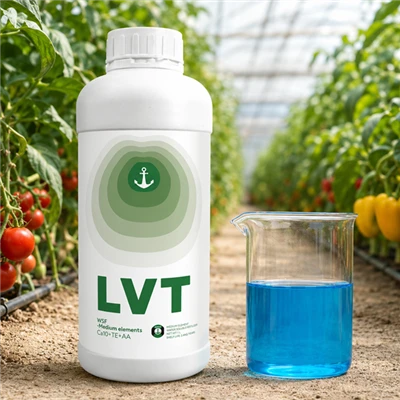
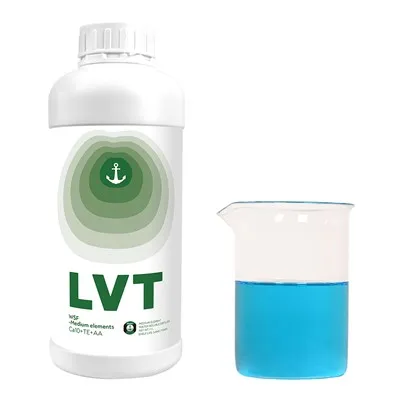
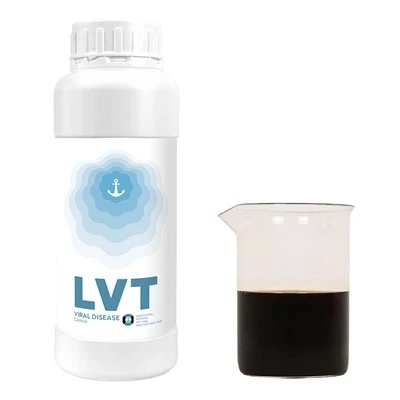
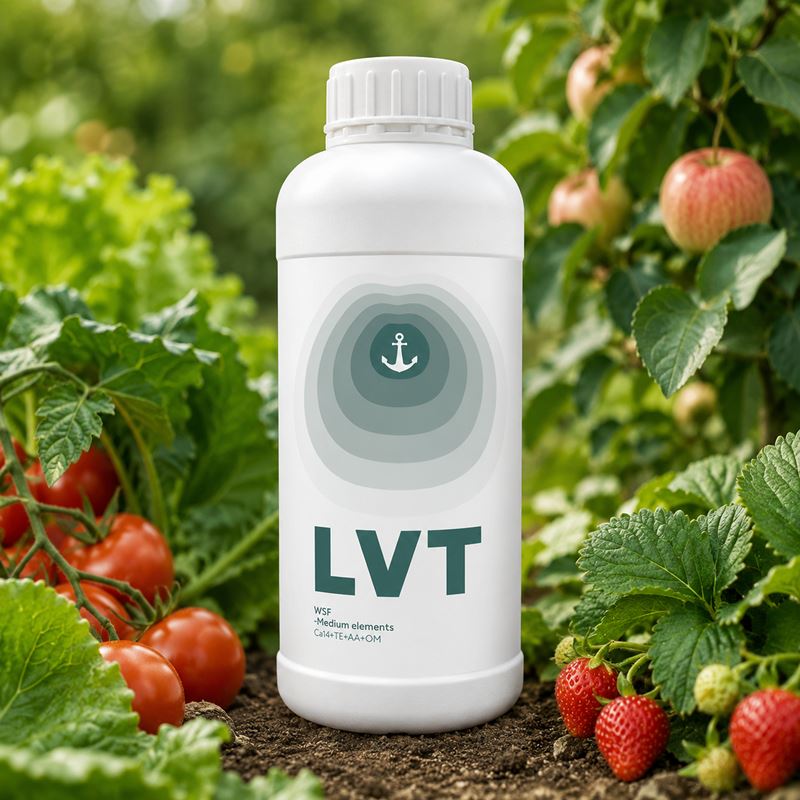
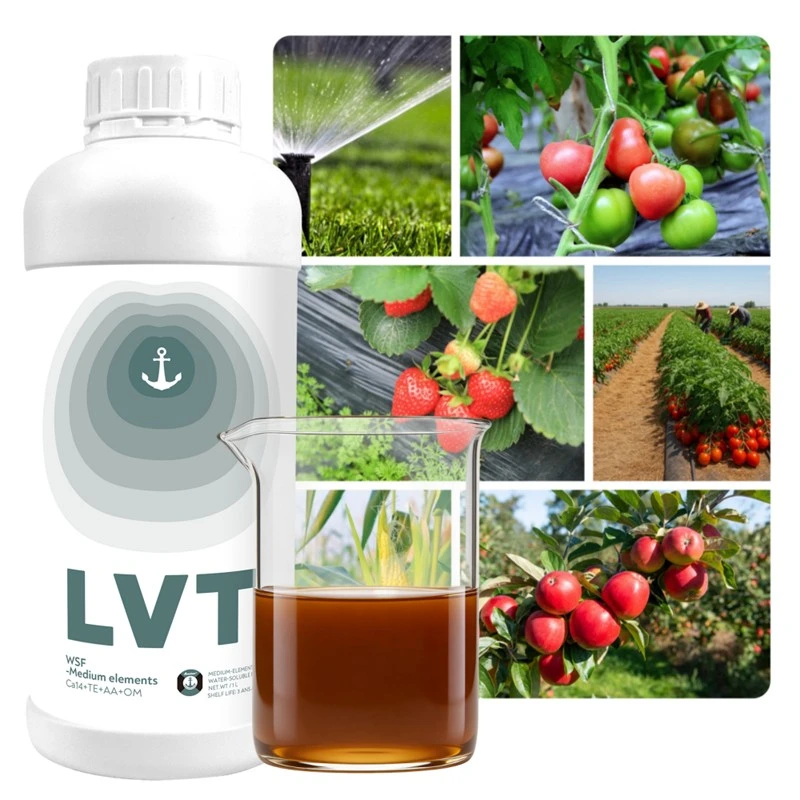
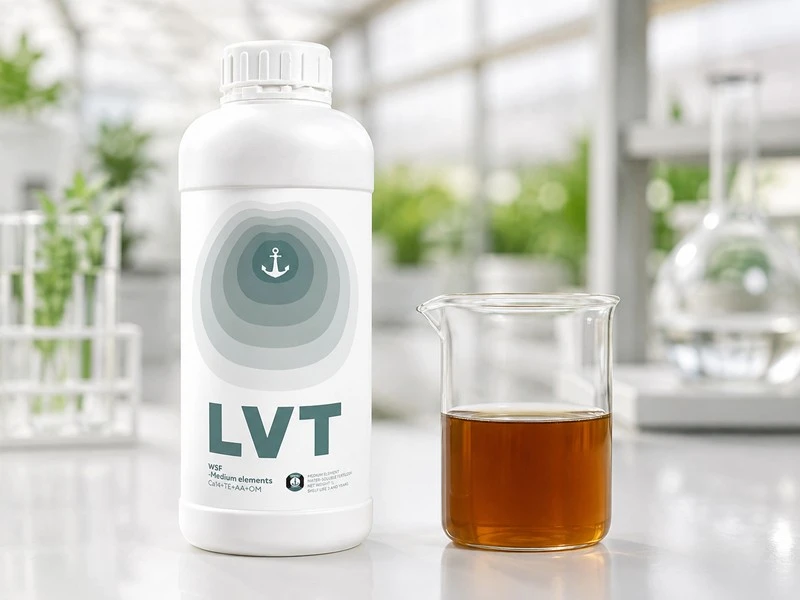
LVT Amino Acid Chelated Calcium Magnesium Liquid Fertilizer combines at least 140 g/L calcium and 20 g/L magnesium in a brown clear liquid. The formulation also supplies nitrogen, phosphorus pentoxide, boron, amino acids and organic matter.
Amino acid chelation is used as the stated chelation technology. The product is intended for whole-canopy foliar application after dilution at 600–1,000 times, providing growers with a supplemental calcium–magnesium input for selected crop stages.
2. A Calcium-Led Formula with Supporting Nutrition
Calcium as the principal secondary nutrient
With calcium declared at no less than 140 g/L, the product is positioned as a calcium-led fertilizer. It may be introduced when a crop nutrition program requires additional foliar calcium during periods of active tissue development.
Calcium movement within plants is influenced by transpiration, root activity, weather and crop condition. Foliar application should therefore be considered a supplemental measure rather than a replacement for root-zone calcium management.
Magnesium for chlorophyll-related nutrition
Magnesium is supplied at a minimum of 20 g/L. Its presence broadens the formulation beyond a single-element calcium product and supports programs designed to maintain adequate magnesium nutrition.
Nitrogen and phosphorus contribution
The formula contains at least 150 g/L nitrogen and 10 g/L phosphorus pentoxide. These nutrients must be included when calculating the crop's total fertilizer input, particularly where other nitrogen-containing foliar products are already being used.
Boron support
Boron is present at a minimum of 2.0 g/L. Calcium and boron are frequently considered together in programs targeting actively developing tissues, but application rates must remain within crop-specific tolerance limits.
Amino acids and organic matter
The formulation contains at least 94.5 g/L amino acids and 87.5 g/L organic matter. These components distinguish it from basic mineral calcium–magnesium solutions. Their inclusion does not, by itself, establish eligibility for certified organic production.
3. Technical Data & Specifications
| Item | Specification |
|---|---|
| Calcium (Ca) | ≥140 g/L |
| Magnesium (Mg) | ≥20 g/L |
| Boron (B) | ≥2.0 g/L |
| Amino Acids (AA) | ≥94.5 g/L |
| Organic Matter | ≥87.5 g/L |
| Nitrogen (N) | ≥150 g/L |
| Phosphorus Pentoxide (P₂O₅) | ≥10 g/L |
| Chelation Technology | Amino acid chelation |
| Formulation | Concentrated clear liquid |
| Appearance | Brown clear liquid |
| Density | 1.6 g/mL |
| pH | 3.5 ± 0.5 |
| Standard Package | 1 L bottle |
| Confirmed Application Method | Whole-canopy foliar spraying |

4. Amino Acid Chelation in a Clear Liquid
The stated amino acid chelation technology is used to incorporate calcium and magnesium into a concentrated liquid formulation. The brown clear appearance also differentiates this product from suspension fertilizers that may require more intensive agitation.
A clear liquid format can support convenient measuring, dilution and foliar-tank preparation. However, clarity does not guarantee compatibility with every pesticide, fertilizer or water source.
Water hardness, pH, temperature and the concentration of other tank-mix materials may influence solution stability. A jar test should be completed before preparing an unfamiliar mixture.
Because the formula contains calcium, concentrated contact with phosphate- or sulfate-rich products may create compatibility problems. Products should be diluted separately and combined only after compatibility has been confirmed.
5. Where It Fits in the Crop Cycle
Active vegetative growth
Young leaves, shoots and growing points may be considered when planning supplemental calcium–magnesium applications. Begin at the more dilute end of the recommended range when treating young plants or sensitive varieties.
Pre-flowering and flowering
The product may be incorporated into a foliar program before flowering or during bloom when calcium, magnesium and boron supplementation is required. Avoid spraying open flowers under stressful weather conditions unless crop tolerance has been established.
Fruit set and early fruit development
Calcium demand is often reviewed during fruit set and early fruit enlargement. Apply the spray evenly across the canopy and accessible developing fruit surfaces without creating excessive runoff.
Foliar application cannot correct every physiological disorder. Results depend on the crop, cultivar, weather, root-zone supply, irrigation management and timing of treatment.
Continued crop maintenance
Additional applications should be based on crop observation, tissue analysis, soil or substrate testing and the complete fertilizer schedule. Avoid unnecessary accumulation of nitrogen or boron from overlapping products.
Discuss a Calcium–Magnesium Nutrition Program
6. Suitable Crops and Use Priorities
The formulation may be considered for crops where supplemental foliar calcium and magnesium are required, including:
- Tomato, pepper and eggplant
- Cucumber, melon and watermelon
- Strawberry and other berry crops
- Apple, pear, grape and citrus
- Leafy vegetables
- Beans and other field crops
- Cut flowers and ornamental plants
- Greenhouse and substrate-grown crops
- Commercial nurseries
Application decisions should be based on crop stage and diagnosed nutrient requirements rather than a fixed calendar.
Priority may be given to periods of rapid leaf formation, flowering, fruit set or early fruit development. Treatment should not be presented as a guaranteed cure for disorders such as blossom-end rot, bitter pit, fruit cracking or tip burn, because these problems can also involve irrigation, salinity, humidity, root health and environmental stress.
7. Application Directions
| Application Method | Recommended Dilution | Coverage | Timing and Notes |
|---|---|---|---|
| Whole-canopy foliar spraying | 1:600–1,000 | Apply a fine, even spray to leaves, growing points and accessible developing fruit surfaces without excessive runoff | Apply during the cooler part of the day; determine frequency from crop stage, sensitivity and the complete fertilizer program |
The recommendations above represent the most suitable application methods and rates for this product. If you plan to use a different fertilization method, please contact us for specific guidance.
Dilution Reference
| Final Water Volume | Product at 600× | Product at 1,000× |
|---|---|---|
| 15 L | 25 mL | 15 mL |
| 20 L | 33.3 mL | 20 mL |
| 100 L | 166.7 mL | 100 mL |
| 500 L | 833.3 mL | 500 mL |
| 1,000 L | 1.67 L | 1.00 L |
For young plants, sensitive crops or first-time use, begin with the 1:1,000 dilution and test a small area before treating the complete crop.
8. Whole-Canopy Spraying Procedure
- Confirm the required final spray volume and dilution ratio.
- Fill the spray tank approximately halfway with clean water.
- Measure the required quantity of fertilizer accurately.
- Pre-dilute the product in a separate container when necessary.
- Add the diluted fertilizer to the tank while maintaining agitation.
- Add only confirmed-compatible materials one at a time.
- Complete the tank with water and mix thoroughly.
- Apply a fine spray evenly across the crop canopy.
- Avoid excessive runoff and concentrated accumulation on leaves or fruit.
- Clean the sprayer and rinse the lines with clean water after application.
- Spray during the cooler part of the morning or late afternoon. Avoid application during intense sunlight, high temperatures, strong wind or imminent rainfall.
- Do not spray severely wilted, drought-stressed, waterlogged or otherwise damaged crops. If adverse weather follows treatment, reassess crop condition before repeating the application.
Request Foliar Application Guidance
9. Mixing, Compatibility and Product Handling
Calcium-containing fertilizers require careful tank-mix management. Do not directly combine this concentrated product with concentrated phosphate or sulfate fertilizers.
When a combined application is required:
- Dilute each product separately.
- Conduct a small jar test using the intended water source.
- Observe the mixture for sediment, cloudiness, separation, excessive foam or abnormal heat.
- Prepare the full tank only when physical compatibility has been confirmed.
- Use the prepared solution during the same application period.
- Physical compatibility does not establish crop safety. When combining the fertilizer with pesticides, plant-growth regulators, oils, alkaline materials or other foliar nutrients, follow the most restrictive label and complete a small-area crop test.
- Store the product tightly closed in a cool, dry and ventilated place. Protect it from direct sunlight, freezing temperatures and excessive heat. Keep it away from children, food, animal feed and incompatible chemicals.
- The standard presentation is a 1 L bottle. Bottle size, label language, carton configuration and private-label design may be customized according to order quantity and destination-market requirements.
10. FAQ
1. Is this a calcium–magnesium suspension fertilizer?
No. The confirmed physical form is a brown clear liquid. Although the previous URL contains the term "suspension fertilizer," the current specification should be used when describing this product.
2. Do the declared values represent percentage by weight?
Not automatically. The confirmed analysis is expressed in grams per litre, including Ca ≥140 g/L, Mg ≥20 g/L and N ≥150 g/L. Density and laboratory data are required before making a separate percentage-by-weight declaration.
3. Can the product prevent blossom-end rot or bitter pit?
No guaranteed prevention claim should be made. Calcium nutrition is one factor associated with these disorders, but water management, root activity, salinity, variety and environmental conditions may also contribute.
4. Can it be applied by fertigation or root drenching?
Whole-canopy foliar spraying is the confirmed application method. Contact the manufacturer for crop-specific guidance before using the product through fertigation, hydroponic systems or root drenching.
5. Can it be mixed with phosphate or sulfate fertilizers?
Avoid directly mixing concentrated calcium fertilizer with concentrated phosphate or sulfate products. Dilute materials separately and complete a jar test before preparing a combined spray.
6. What dilution should be used for the first application?
Begin at 1:1,000 for sensitive crops, young plants or first-time use. Apply the solution to a small area and observe crop response before treating the complete field or greenhouse.
Contact WEIFANG LVWEITE BIO-TECH CO., LTD. for:
- Product samples
- Technical data and COA
- MSDS
- OEM packaging
- Private-label production
- Export quotations
- Registration support
Hot Tags: amino acid chelated calcium magnesium fertilizer | lvt, China amino acid chelated calcium magnesium fertilizer | lvt manufacturers, suppliers, factory