Calcium Magnesium Suspension Fertilizer for Tomato and Pepper
Products Description
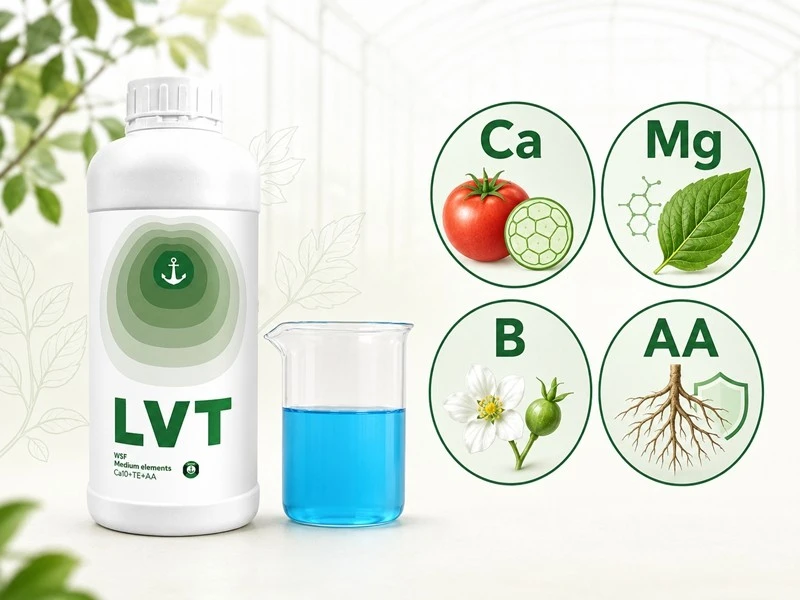
Our Calcium Magnesium Suspension Fertilizer for Tomato and Pepper is a concentrated liquid nutrient formulation developed for flowering, fruit setting and rapid fruit development.
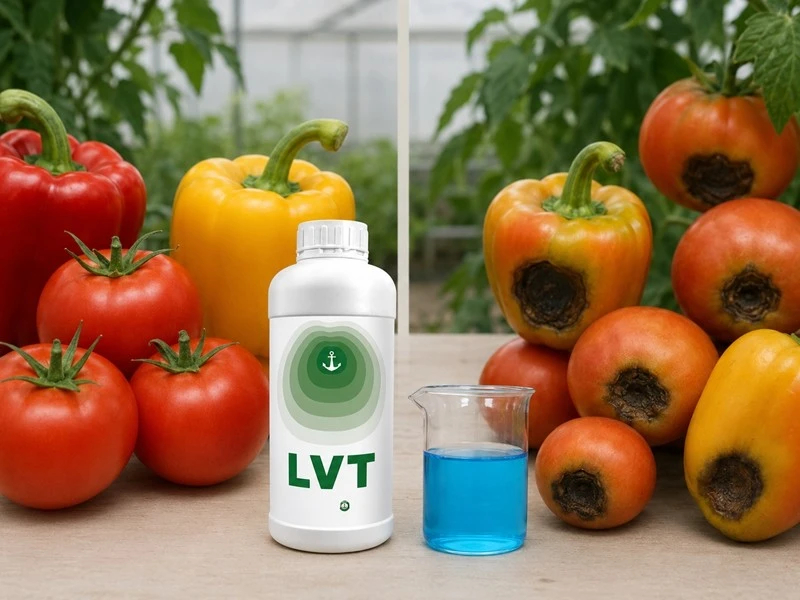
It supplies calcium, magnesium and boron together with amino acids and organic matter to support cell-wall formation, leaf photosynthesis and balanced fruit growth. Applied preventively through fertigation or root drenching, it helps maintain a continuous calcium supply during the periods when tomato and pepper fruits are most susceptible to calcium-related physiological disorders.
The product is suitable for greenhouse cultivation, open-field production, drip irrigation and other intensive vegetable-growing systems.
Technical Data & Specifications
| Parameter | Content |
|---|---|
| Calcium (Ca) | ≥140 g/L |
| Magnesium (Mg) | ≥20 g/L |
| Boron (B) | ≥2.0 g/L |
| Amino Acids (AA) | ≥100 g/L |
| Organic Matter | ≥110 g/L |
| Physical form | High-density liquid suspension |
| pH value | 4.5–7.5 |
| Density | 1.35–1.55 g/mL |
Why Tomato and Pepper Crops Need Calcium?
Tomatoes and peppers have a high calcium demand during flowering, fruit setting and early fruit enlargement. Calcium is absorbed mainly through the roots and transported with water to actively growing tissues.
Developing fruits transpire less than leaves and therefore receive calcium less easily. Irregular irrigation, root damage, excessive salinity, high temperatures or excessive ammonium nitrogen can further restrict calcium uptake.
When the calcium supply to young fruit tissue becomes insufficient, growers may observe:
- Water-soaked or sunken areas near the blossom end
- Weak fruit tissue
- Uneven fruit development
- Reduced fruit firmness
- Greater susceptibility to handling damage
- Lower marketable yield
This product provides a concentrated source of calcium, but it should be used together with stable irrigation and balanced nutrient management. Blossom-end rot is a physiological disorder and cannot be corrected by calcium fertilizer alone if water stress or root problems continue.
Key Nutritional Benefits
1. Supports Calcium Supply During Fruit Development
The formulation supplies 140 g/L of calcium for use during flowering, fruit setting and rapid fruit enlargement. Preventive application through the root zone helps maintain calcium availability when fruit demand is increasing.
2. Supports Fruit Structure and Firmness
Calcium is an important component of plant cell walls and membranes. An adequate calcium supply supports the structural development of young tomato and pepper fruits. It can contribute to:
- More uniform fruit development
- Improved tissue strength
- Better fruit firmness
- Improved tolerance to transportation and handling
Remarks: Results depend on variety, climate, irrigation, soil conditions and the overall fertilization programme.
3. Calcium and Boron Combination
Boron participates in cell-wall development, flowering and the growth of young plant tissues. Its inclusion complements the calcium programme during reproductive growth.
4. Magnesium for Photosynthetic Activity
Magnesium is a central component of chlorophyll and is required for normal photosynthesis. Providing magnesium during heavy fruiting helps the crop maintain healthy leaf activity and supports the production and movement of carbohydrates needed for fruit development.
5. Amino Acids and Organic Matter
The formula contains 100 g/L amino acids and 110 g/L organic matter. These components provide an organic nutrient matrix and make the product suitable for integrated nutrition programmes used in intensive tomato and pepper production.
Recommended Crops
- Greenhouse tomatoes
- Field-grown tomatoes
- Cherry tomatoes
- Processing tomatoes
- Sweet peppers
- Bell peppers
- Chili peppers
- Greenhouse fruiting vegetables
The same formulation may also be used in calcium-demanding crops such as eggplant, cucumber, melon and watermelon after local agronomic evaluation.
Application Recommendations
| Application method | Suggested dilution | Suggested interval | Recommended use |
|---|---|---|---|
| Fertigation | 1:600–800 | Every 10–15 days | Main application method during flowering and fruit development |
| Root drenching | 1:500–600 | Every 10–15 days | Soil or substrate application around the active root zone |
| Foliar spraying | 1:500–800 | Every 7–10 days | Supplementary leaf nutrition only |
Remarks:
1. Application rates should be adjustedaccording to:
- Crop variety
- Growth stage
- Water quality
- Soil or substrate test
- Leaf or sap analysis
- Irrigation system
- Climate and humidity
- Existing calcium level
- Local fertilizer regulations
2. Important Agronomic Note:
For reducing the risk of blossom-end rot, fertigation or root-zone application should be treated as the primary method.
Foliar application may supplement general calcium and magnesium nutrition, but calcium absorbed by mature leaves is not efficiently redistributed to developing fruit. Foliar spraying should therefore not be presented as a cure for fruit already affected by blossom-end rot.
Practical Management Recommendations
For better results, growers should use this fertilizer as part of a complete calcium-management programme:
- Maintain uniform soil or substrate moisture.
- Avoid alternating severe dryness and excessive irrigation.
- Prevent damage to active feeder roots.
- Avoid excessive ammonium nitrogen during flowering and fruit setting.
- Monitor potassium, magnesium and salinity levels to avoid nutrient antagonism.
- Maintain suitable root-zone pH.
- Begin calcium application before the rapid fruit enlargement stage.
- Use soil, water or leaf analysis where possible.
Tank-Mix Compatibility
Because this product contains a high concentration of calcium, do not mix it in the same concentrated stock tank with:
- Phosphate fertilizers
- Sulfate fertilizers
- Highly alkaline products
- Products known to form insoluble calcium salts
When using an A/B fertigation system, place the calcium product in the calcium-compatible stock tank.
Always conduct a small jar test before preparing a large tank mixture. When compatibility is uncertain, apply the products separately and flush the irrigation system between applications.
Packaging and OEM Service
Standard packaging options:
500 mL, 1 L, 20 L, 200 L
Customized packaging is available upon request, including:
- Private-label production
- Customized label design
- Different bottle and drum sizes
- Customer-specific nutrient specifications
- Multilingual labels
- Export cartons and palletized packaging
- COA and MSDS documentation
- Sample supply for evaluation
Final packaging and label information can be adjusted according to the registration requirements of the importing country.
Frequently Asked Questions
-
Is this product suitable for both tomatoes and peppers?
Yes. The formulation is designed for fruiting vegetables with high calcium demand, especially tomatoes, sweet peppers, bell peppers and chili peppers.
-
Can this fertilizer cure fruit that already has blossom-end rot?
No. Fruit tissue that has already developed blossom-end rot will not recover. The product should be applied preventively to support newly developing fruit, together with stable irrigation and proper root-zone management.
-
Should it be applied through leaves or roots?
Fertigation and root drenching are the preferred methods for tomato and pepper calcium programmes. Foliar spraying can be used as supplementary nutrition but should not replace root-zone calcium management.
-
When should application begin?
Application should normally begin before flowering or at the beginning of fruit setting. Do not wait until severe calcium-deficiency symptoms appear.
-
Can it be mixed with NPK fertilizer?
It depends on the composition and concentration of the NPK product. Do not mix concentrated calcium with phosphate- or sulfate-rich fertilizers in the same stock tank. Use separate tanks or apply the products at different times.
-
Can the dilution rate be used in every country?
The listed dilution rates are general recommendations based on the existing formulation. Commercial users should adjust the final rate according to water quality, climate, crop stage, local cultivation practices and regulatory requirements.
-
Is private-label production available?
Yes. We provide OEM and private-label services, including customized packaging, label design, product documentation and formulation adjustment.
Contact WEIFANG LVWEITE BIO-TECH CO., LTD. for:
- Product samples
- Technical data
- COA and MSDS
- OEM packaging
- Private-label production
- Export quotation
- Registration document support
Hot Tags: calcium magnesium suspension fertilizer for tomato and pepper, China calcium magnesium suspension fertilizer for tomato and pepper manufacturers, suppliers, factory