High Phosphorus Flower Booster Liquid Fertilizer
Introduction
Flowering marks a change in the way a crop uses nutrients. The feeding programme that supported rapid leaf and stem growth may no longer match the plant's requirements once buds begin to form. Continuing with a strongly nitrogen-led fertilizer at this point can also make it difficult to maintain the intended balance between vegetative and reproductive growth.
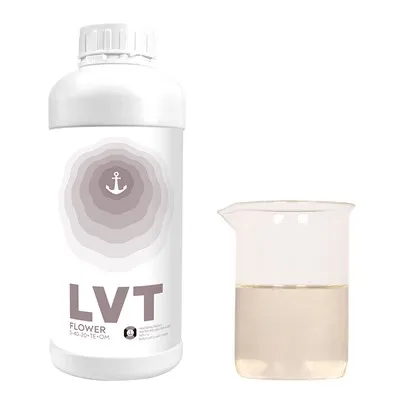
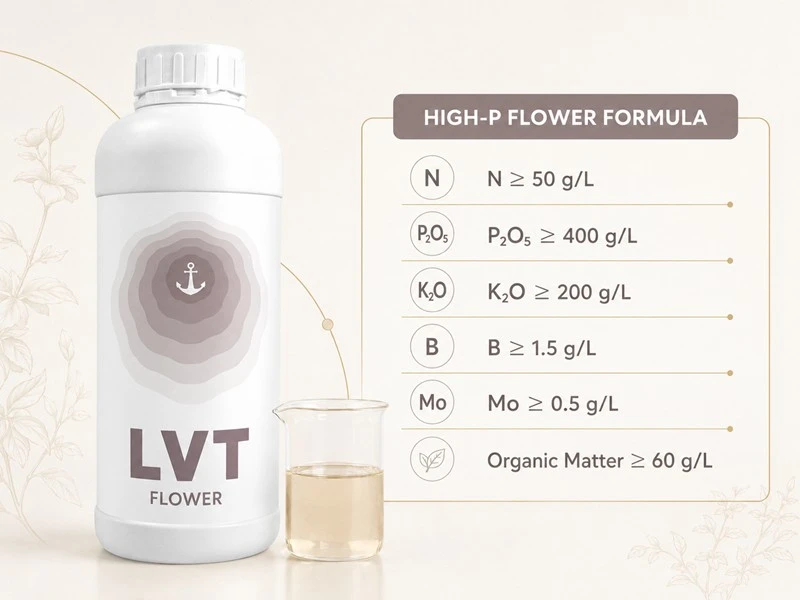
LVT High Phosphorus Flower Booster is formulated for this transition. Each litre contains at least 400 g of phosphorus pentoxide, supported by 200 g of potassium oxide and a lower nitrogen concentration of 50 g/L. The product is therefore positioned as a stage-specific fertilizer rather than a general balanced feed.
Boron and molybdenum complement the macronutrient profile, while organic matter provides an additional organic component. The concentrated liquid may be introduced before flowering and used during the active bloom period through fertigation, foliar application or root drenching.
Technical Data & Specifications
| Parameter | Guaranteed Content |
|---|---|
| Nitrogen (N) | ≥50 g/L |
| Phosphorus Pentoxide (P₂O₅) | ≥400 g/L |
| Potassium Oxide (K₂O) | ≥200 g/L |
| Boron (B) | ≥1.5 g/L |
| Molybdenum (Mo) | ≥0.5 g/L |
| Organic Matter | ≥60 g/L |
| Nutrient Positioning | High phosphorus, moderate potassium |
| Formulation | Concentrated liquid |
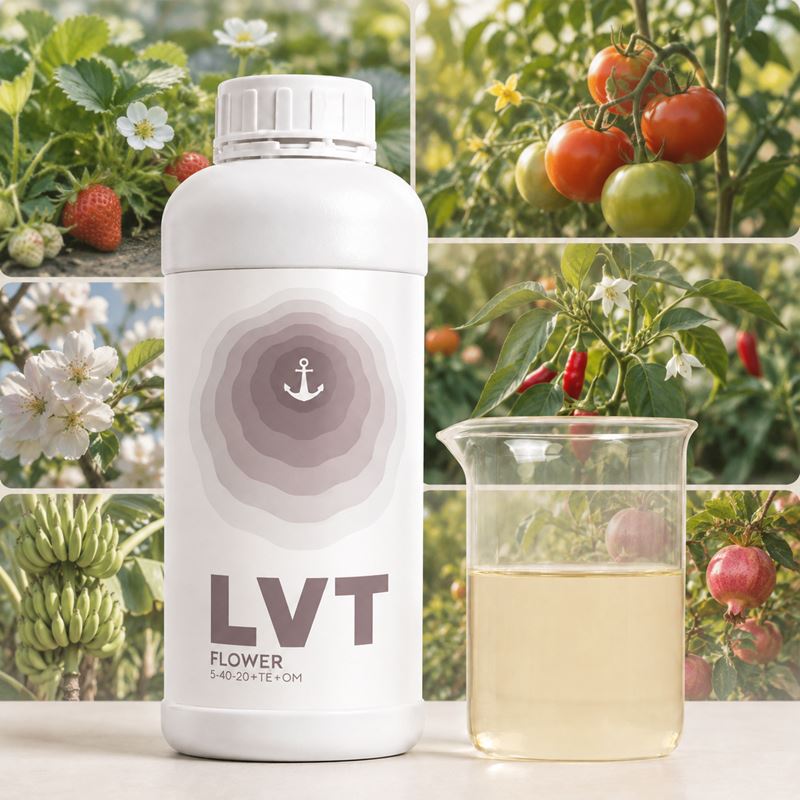
| Appearance | Pale-yellow liquid |
| Standard Package | 1 L bottle |
| Available Service | OEM and private label |
A Formula for the Flowering Transition
Phosphorus-led nutrition
Phosphorus is involved in plant energy transfer and the development of new tissues. Its high concentration distinguishes this product from balanced NPK fertilizers intended for routine feeding.
Controlled nitrogen input
The formula retains nitrogen at 50 g/L. This supplies a limited nitrogen contribution without making nitrogen the dominant component of the flowering-stage application.
Potassium support
Potassium is supplied at 200 g/L and should be considered alongside the crop's complete potassium programme. Crops may require a more potassium-focused formula after flowering, particularly during fruit development and maturation.
Boron and molybdenum
Boron is associated with the normal development of growing and reproductive tissues. Molybdenum participates in plant enzyme systems involved in nitrogen metabolism. Both elements should be applied within appropriate crop-specific limits.
Organic matter
Organic matter broadens the formulation beyond mineral NPK. Its presence does not automatically mean that the product is certified for organic agriculture.
Where It Fits in a Nutrition Program
Before visible flowering
The product may be introduced as the crop approaches bud formation and the fertilizer program begins moving away from vegetative-growth formulas.
During active bloom
Applications may continue during flowering when a phosphorus-led nutrient input is required. Concentration and frequency should reflect crop sensitivity, weather and other fertilizer inputs.
After flowering
Once pollination and fruit set are established, growers should reassess the nutrient ratio. A fruit-setting or high-potassium formula may be more appropriate for the following stage.
This product is not intended to replace soil testing, water analysis or a complete base-fertilizer program.
Suitable Crops
The formulation may be considered for:
- Tomato, pepper, cucumber and eggplant
- Melon and watermelon
- Strawberry and other berry crops
- Grapes and established fruit trees
- Beans and other flowering field crops
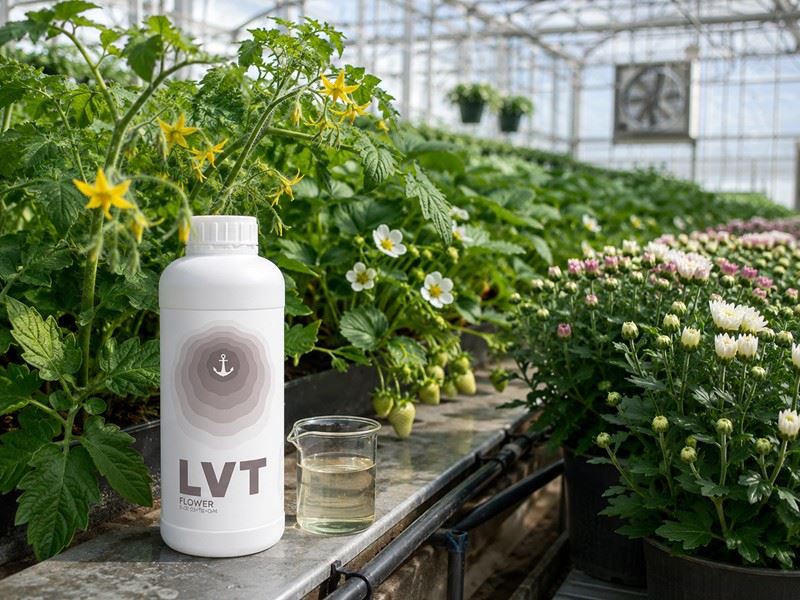
- Cut flowers and potted flowering plants
- Greenhouse and substrate-grown crops
- Commercial nurseries
The application stage should be determined by crop development rather than by a fixed calendar date.
Application Directions
Dilution reference
Begin at the more dilute end of the range when treating young plants, sensitive varieties or crops receiving the product for the first time.
Method-Specific Guidance
Fertigation
Pre-dilute the measured fertilizer before introducing it into the irrigation system. Distribute the solution through the active root zone and finish with clean water to rinse the irrigation lines.
Foliar spraying
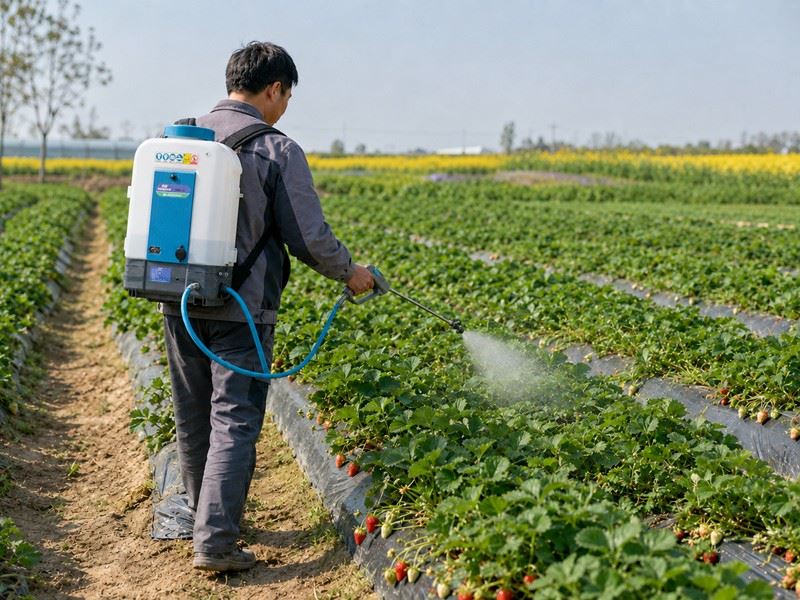
Apply a fine, even spray to the foliage and developing flower structures without creating excessive runoff. Spray during the cooler part of the morning or late afternoon. Avoid strong sunlight, high temperatures, wind and imminent rainfall.
Root drenching
Apply the diluted solution evenly around the feeder-root area. Do not pour concentrated fertilizer directly onto roots, stems or dry growing media.
Mixing and Compatibility
Because this formula contains a high phosphorus concentration, tank compatibility requires particular attention.
- Half-fill the tank with clean water.
- Add the measured fertilizer while maintaining agitation.
- Dilute any additional products separately.
- Add compatible materials one at a time.
- Complete the tank volume and mix thoroughly.
- Apply the prepared solution during the same application period.
Do not combine concentrated phosphate fertilizer directly with concentrated calcium products. A small jar test should be completed before preparing an unfamiliar tank mixture. Stop mixing if sediment, separation, excessive foam or abnormal heat develops.
Packaging and Export Supply
Standard presentation:
- 1 L white plastic bottle
- Export carton configuration according to order requirements
OEM and export services include:
- Private-label production
- Customized bottle and carton specifications
- Multilingual labels
- Product samples
- Technical specification and COA
- MSDS documentation
- Export cartons and palletization
- Registration-document support
FAQ
1. Is this a balanced fertilizer for continuous use?
No. Its nutrient profile is dominated by phosphorus and is intended for a specific part of the crop cycle. A balanced formula may be more suitable outside the pre-bloom and flowering period.
2. Does "5-40-20" mean percentage by weight?
Not necessarily. The confirmed analysis is expressed in grams per litre: N ≥50 g/L, P₂O₅ ≥400 g/L and K₂O ≥200 g/L.
3. Can it be used throughout fruit development?
The crop's nutrient demand usually changes after flowering. Fruit-setting, expansion and ripening stages may require a formula containing a different nitrogen-to-potassium relationship. We also have formula for fruit development stage.
4. Can it be mixed with calcium fertilizer?
Direct mixing of concentrated calcium and high-phosphorus products may cause precipitation. Apply them separately unless compatibility has been confirmed through formulation data and a jar test.
5. Is it suitable for organic farming?
Containing organic matter does not establish organic certification. Eligibility depends on the ingredients, manufacturing process and regulations of the destination market.
6. Can the packaging be customized?
Yes. Bottle size, label language, cartons and private-label presentation can be customized subject to order quantity, production feasibility and destination-market requirements.
Contact WEIFANG LVWEITE BIO-TECH CO., LTD. for:
- Product samples
- Technical data and COA
- MSDS
- OEM packaging
- Private-label production
- Export quotations
- Registration support
Hot Tags: high phosphorus flower booster liquid fertilizer, China high phosphorus flower booster liquid fertilizer manufacturers, suppliers, factory