Root-Knot Nematode Specific Water Soluble Fertilizer
Introduction

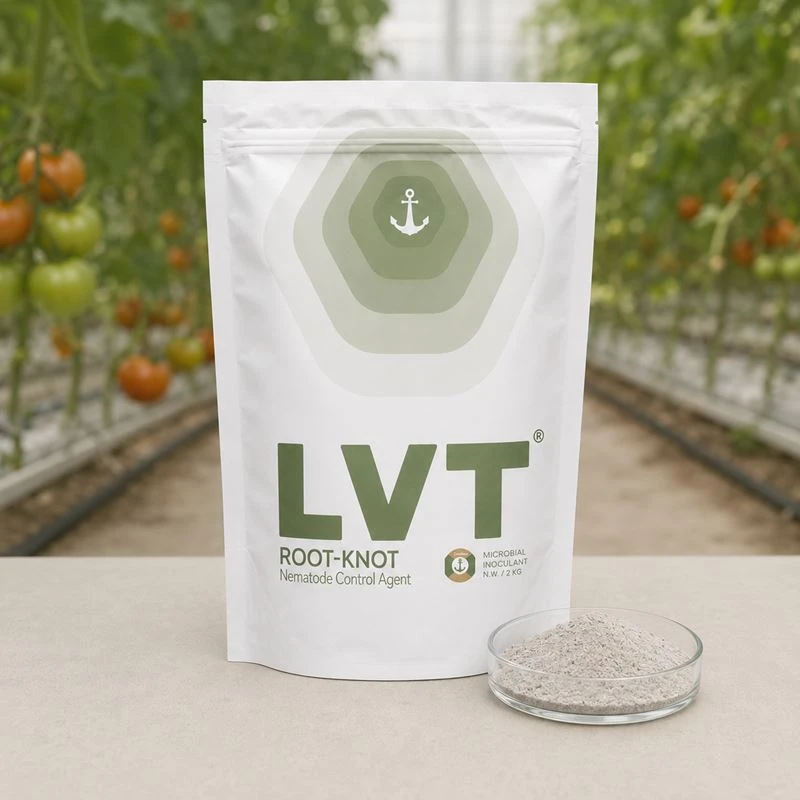
Root-Knot Nematode Specific is a water-soluble powder formulated for crops growing in fields with a history of root-knot nematode problems.
The formula combines 30% Chinese herbal extracts with humic acid, fulvic acid and selected trace elements. It provides root-zone nutrition for crops showing weak growth, reduced fine-root development or poor nutrient uptake associated with damaged root systems.
The product can be applied through drip irrigation, soil drenching, sprinkler irrigation or foliar spraying. It should be included in an integrated nematode-management program rather than used as a replacement for soil testing, resistant varieties or registered nematicides.
Technical Data & Specifications
| Parameter | Specification |
|---|---|
| Chinese Herbal Extracts | 30% |
| Fulvic Acid (FA) | 15% |
| Humic Acid (HA) | 13.5% |
| Iron (Fe) | 2.3% |
| Zinc (Zn) | 0.35% |
| Manganese (Mn) | 0.35% |
| Copper (Cu) | 0.22% |
| Boron (B) | 0.11% |
| Magnesium (Mg) | 0.10% |
| Physical form | Fine water-soluble powder |
| pH value | 8.0 ± 0.5 |
| Standard packaging | 2 kg/bag |
How the Formula Supports Crops
Root-Zone Nutrition
Humic acid and fulvic acid provide an organic nutrient matrix suitable for root-zone application. They can be incorporated into programs designed to maintain nutrient availability and support the activity of remaining healthy roots.
Trace Element Supply
This formula contains chelated trace elements, such as iron, zinc, manganese, copper, boron and magnesium. These elements provide supplementary nutrition when root damage restrict normal nutrient uptake.
Support for New Root Development
Roots already seriously deformed by root-knot nematodes will not return to their original condition. The practical objective is to support the plant's remaining root system and newly developing feeder roots.
Recognizing Possible Root-Knot Nematode Damage
Possible above-ground symptoms include:
- Uneven or patchy crop growth
- Yellowing and reduced vigour
- Wilting during warm weather
- Poor response to irrigation or fertilization
- Stunted plants in localized areas
- Premature decline
Typical below-ground symptoms include:
- Irregular swellings or galls on roots
- Reduced fine-root development
- Shortened or excessively branched roots
- Root deformation
- Secondary root decay in severe cases
Visual symptoms should preferably be confirmed through soil and root testing because different nematode species and root diseases require different management measures.

Recommended Crops
- Tomato
- Pepper
- Cucumber
- Eggplant
- Melon
- Watermelon
- Strawberry
- Beans
- Leafy vegetables
- Greenhouse vegetables
- Nursery plants
- Young fruit trees
- Ornamental crops
Application Recommendations
| Application method | Recommended rate | Metric conversion |
|---|---|---|
| Drip irrigation | 500 g/mu | 7.5 kg/ha |
| Soil drench or irrigation application | 1,000 g/mu | 15 kg/ha |
| Sprinkler irrigation | 100 g/mu | 1.5 kg/ha |
| Foliar spraying | Dilute 600–800 times | One 2 kg bag covers about 40 mu / 2.67 ha |
Crop sensitivity and local nematode species should be considered when setting the final application rate.
Application Notes
- Pre-dissolve the powder in a smaller container before adding it to the main tank.
- Filter the solution before drip irrigation when necessary.
- Apply root-zone treatments around the active feeder-root area.
- For foliar spraying, one 2 kg bag requires approximately 1,200–1,600 litres of water.
- Spray during the cooler part of the day.
- Avoid application immediately before heavy rain.
- Flush irrigation lines with clean water after application.
- Conduct a small-area crop-safety test before commercial use.
The final rate should be adjusted according to crop stage, nematode pressure, soil conditions, irrigation method and local field experience.
Integrated Root-Knot Nematode Management
Root-knot nematodes are best addressed before or early in crop establishment. A practical program may include:
- Soil and root testing to identify nematode species and population levels
- Resistant or tolerant crop varieties where available
- Rotation with suitable non-host crops
- Removal of heavily affected roots and crop residues
- Control of susceptible weeds
- Use of clean seedlings and planting media
- Cleaning soil from tools and equipment
- Balanced irrigation and fertilizer management
- Apply locally registered biological or chemical nematicides when required
Different root-knot nematode species do not have exactly the same crop hosts. Identifying the species improves decisions about crop rotation and resistant varieties.
Mixing and Compatibility
- Conduct a jar test before tank mixing.
- Pre-dissolve the powder separately.
- Maintain agitation during preparation and application.
- Avoid strongly acidic products.
- Do not mix directly with strong oxidants or disinfectants.
- Check pesticide labels before combining products.
- Do not assume compatibility with nematicides or fungicides without testing.
Packaging and OEM Service
Standard packaging:
2 kg laminated bag
- Customized services:
- Alternative bag sizes
- Private-label production
- Multilingual labels
- Export cartons and pallets
- COA and MSDS
- Product samples
- Customized application directions
- Registration-document support
FAQ
1. Is this product a nematicide?
No. Under the current product data, it is presented as a water-soluble root-zone fertilizer containing herbal extracts, humic substances and trace elements.
2. Can it remove existing root galls?
No. Existing galls and severely deformed roots will not return to their original structure. The product is intended to provide root-zone nutrition and support newly developing roots.
3. When should the product be applied?
It is best incorporated early in the crop cycle, particularly in fields with a known history of root-knot nematodes. Application after severe crop decline may produce limited results.
4. Can it be applied through drip irrigation?
Yes. Pre-dissolve the powder, filter the solution where necessary and flush the irrigation system after application.
5. Can it be used preventively?
It may be included in an early root-zone programme in fields with a known history of root-knot problems. Preventive use should be combined with soil testing, crop rotation and resistant varieties where available.
6. Can it be mixed with a nematicide?
Compatibility depends on the nematicide formulation. Check the pesticide label, conduct a jar test and complete a small-area test before large-scale application.
Contact WEIFANG LVWEITE BIO-TECH CO., LTD. for:
Product samples
Technical data and COA
MSDS
OEM packaging
Private-label production
Export quotations
Registration support
Hot Tags: root-knot nematode specific water soluble fertilizer, China root-knot nematode specific water soluble fertilizer manufacturers, suppliers, factory